
Which Business Workflows Should You Automate With AI First?
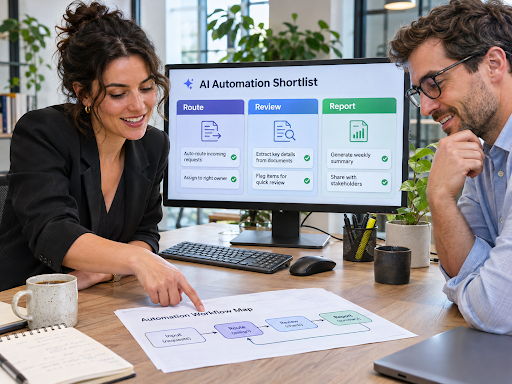
The first AI project usually begins with a familiar frustration: somebody keeps sorting the same requests, assembling the same report or searching for the same information. Before buying another tool, look at where that work slows the business down. A workflow audit gives you a place to examine the systems, data and people involved. The aim is to choose a manageable starting point with a clear purpose. The examples below give you questions to guide that decision. The right first task varies by business.
Start With Repeated Routing Work
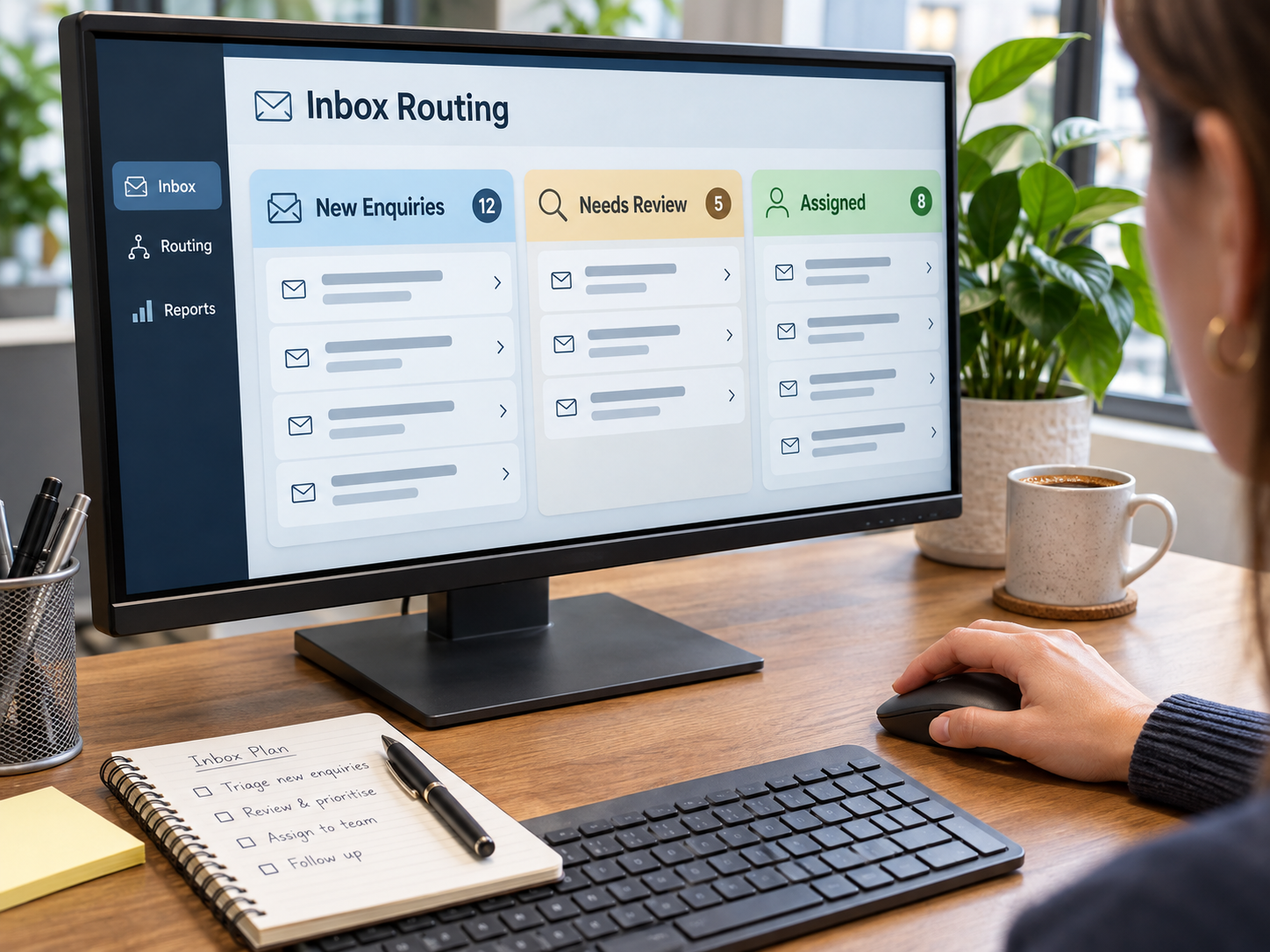
Routing is one of the practical AI workflow areas we work on at Burst Online. For your own shortlist, begin by looking at incoming work and how it reaches the person responsible. Ask where the current process becomes unclear or requires repeated manual sorting.
Write down the information that arrives, the destination it needs to reach and the exceptions someone must review. A useful discussion stays close to the actual process. A broad request to automate the inbox leaves too many operational decisions undefined.
Start with a workflow you can explain clearly. If different teams disagree about who should receive a request, settle that responsibility before asking a system to route it.
Examine Recurring Reporting Tasks

Reporting deserves attention when the team repeatedly assembles information from the systems it already uses. Our work brings analytics and operational systems into the same conversation, which helps keep the report connected to its business purpose.
Choose a specific report to examine. Who uses it, what decision does it support, and which inputs does it need? Those questions give you a better starting point than a general request for an AI dashboard.
Keep the reviewer visible in the plan. Decide who checks the output and how the team will judge whether the revised workflow is useful. A polished report is not enough if nobody can explain what to do with it.
Keep Human Review in Support Workflows

Support is another area where we develop practical AI workflows. Consider which part of the process you want to improve before deciding how much responsibility to give the system. Finding information, preparing a response and sending that response are separate decisions.
Identify where human judgment should remain. Our approach includes human-in-the-loop review and assistants connected with real business data. Discuss what information the workflow should use and who approves customer-facing output.
The first project should have an accountable owner. Someone needs to recognize an unsuitable result, resolve an exception and decide when the process needs adjustment.
Review Research and Information Tasks

Research and productivity workflows can also belong on the shortlist. Look for a recurring information task with a defined purpose, then describe what a useful result would contain. Keep the request tied to the work your team actually performs.
Ask which business information the assistant would need and where that information currently lives. A project may involve connections between existing tools or databases, so the underlying systems deserve attention alongside the AI component.
Avoid defining success as simply generating more material. Decide who will use the result and how they will check it. That keeps the research task attached to an outcome rather than a growing folder of unused summaries.
Choose a Starting Point Through an Audit

At Burst Online, we begin by reviewing the website, marketing, data and operating systems together. That broader view helps frame a workflow project within the business rather than treating it as a disconnected software experiment.
Bring a short list of recurring tasks and the following questions to the planning discussion:
- Which task has a clear owner and a defined result?
- What systems and data does the task depend on?
- Where must a person review or approve the work?
- How will the team judge whether the change is useful?
Our delivery approach maps requirements and dependencies before build work, then uses phased delivery and ongoing review. Choose the first workflow after that assessment, with a scope the team can explain and evaluate.
Frequently Asked Questions
Should Every Repetitive Task Use AI?
No automatic choice is appropriate for every task. Review the actual process and its system connections before deciding what kind of improvement it needs.
What Should I Prepare for a Workflow Audit?
Bring the systems involved, the task you want to improve and the outcome you need. Note who owns the work and where review is required.
Can Support Automation Retain Human Approval?
Yes. Human-in-the-loop review is part of our AI workflow approach. The specific approval points should be defined for the business process.
Final Takeaway
Choose the first workflow by examining real work. Routing, reporting, support and research each offer a starting point, but their usefulness depends on your systems and the problem you need to solve. Give the project a clear owner, identify the information it needs and decide where people must review the result. A workflow audit can help bring those requirements together before a build begins. Start with a scope your team understands, then use the results of that work to guide the next decision. That gives the automation project a practical purpose from the beginning.
Note: This article provides general information about digital marketing, websites and AI-enabled services. Recommendations and outcomes depend on your goals, audience, data and systems. Visit Burst Online to discuss guidance suited to your business.



Member discussion