
SEO vs AEO vs GEO and What Businesses Should Prioritize
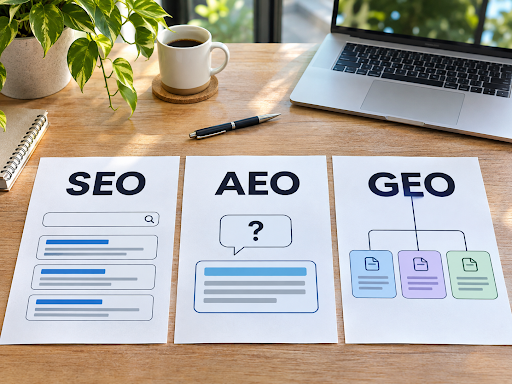
A business owner can hear three different search strategies in one meeting and still leave without knowing which website problem to fix first. SEO, AEO and GEO describe different parts of online discovery, but they often depend on the same pages. Clear services, useful answers and a site that works well matter across all three. A website visibility audit can show where those foundations need attention before you commit to another round of content or development.
SEO Gives Your Website a Searchable Foundation
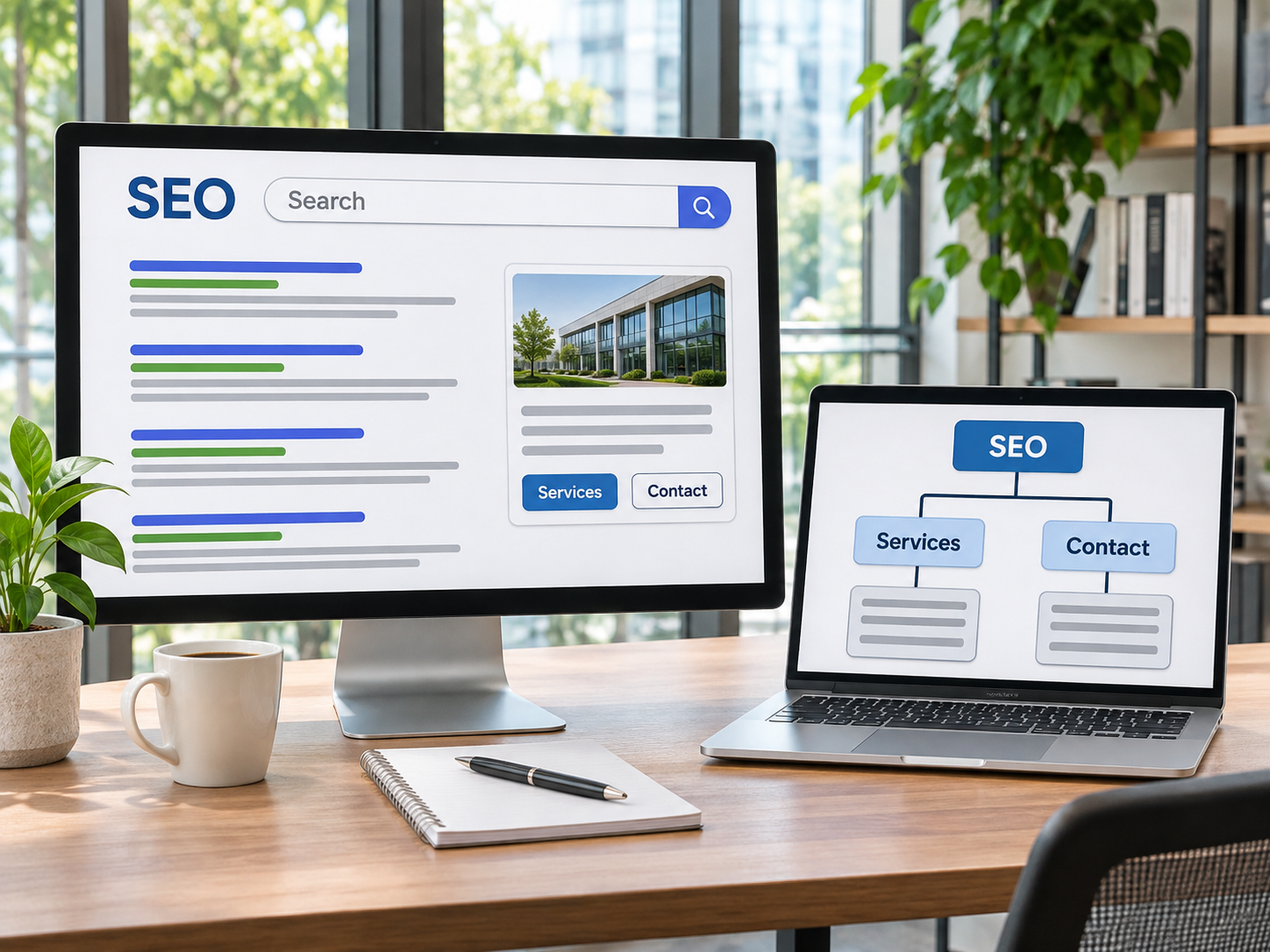
Search engine optimization helps search systems find, understand and rank a website. For a business, that starts with making the offer clear. Each core service needs a focused page that explains what customers can expect, while navigation should help visitors reach that information without searching through unrelated material.
Technical work supports those pages. Crawlability, indexing, mobile usability and loading performance all deserve attention. A carefully written service description has limited value when the page is difficult to access or frustrating to use. Reviewing content and technical health together makes the next improvement easier to choose.
Keep SEO in the plan as AI search develops. Existing pages often need clearer structure, stronger internal links or more specific information before they need replacing. Fixing those weaknesses also gives answer-focused content a more useful home.
AEO Answers the Questions Customers Actually Ask
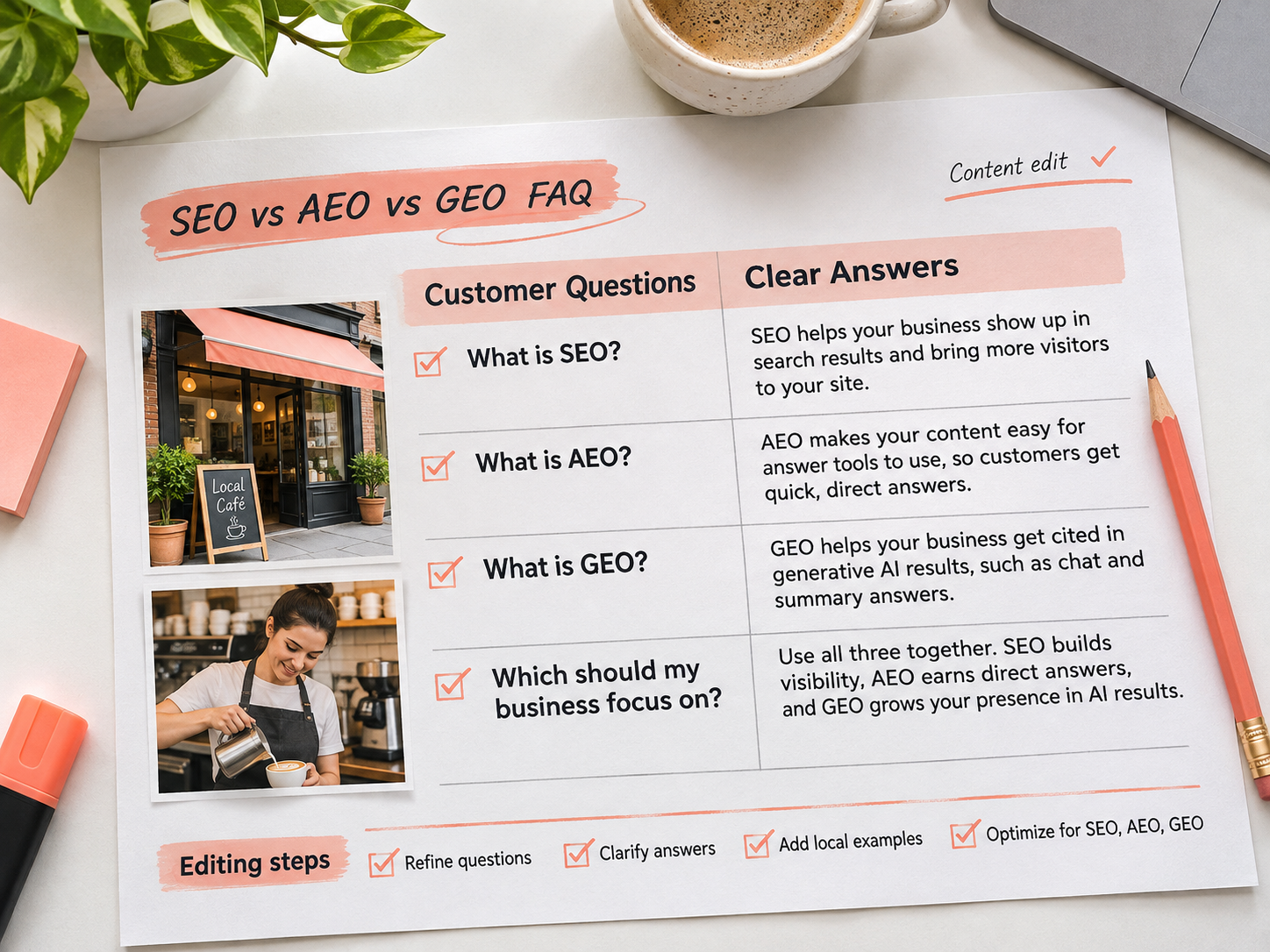
Answer engine optimization focuses on clear responses to specific questions. Start with the questions customers ask before they enquire: what a service includes, who it suits, what information the team needs and how the process works. Those answers belong near the relevant service, where readers can use them.
Write the direct answer first, then add the detail that makes it useful. A short response can help someone orient themselves, while an explanation or example helps them decide whether the service fits. Avoid filling a page with questions that repeat the same point in different words.
An FAQ section should resolve uncertainty. Review it alongside the service page so that the wording agrees and the next step remains clear. Place answers beside the relevant services so customers can find and use them.
GEO Makes Expertise Easier to Understand

Generative engine optimization concerns how AI-powered discovery tools may understand a business, its expertise and its content. The practical starting point is a website that explains who the business is and supports its statements with useful detail. Vague claims about being the best give readers little to evaluate.
Make genuine experience easy to find. Team information, relevant project examples and accurate business details can help explain the work behind the service. Keep service areas and contact information consistent, and update pages when the underlying offer changes.
GEO should build on the same accurate material customers already need. It does not justify invented testimonials, padded expertise claims or promises that an AI system will recommend the business. Useful, well-organized information gives those systems clearer material to interpret, without guaranteeing inclusion.
Prioritize the Weakest Part of the Customer Journey
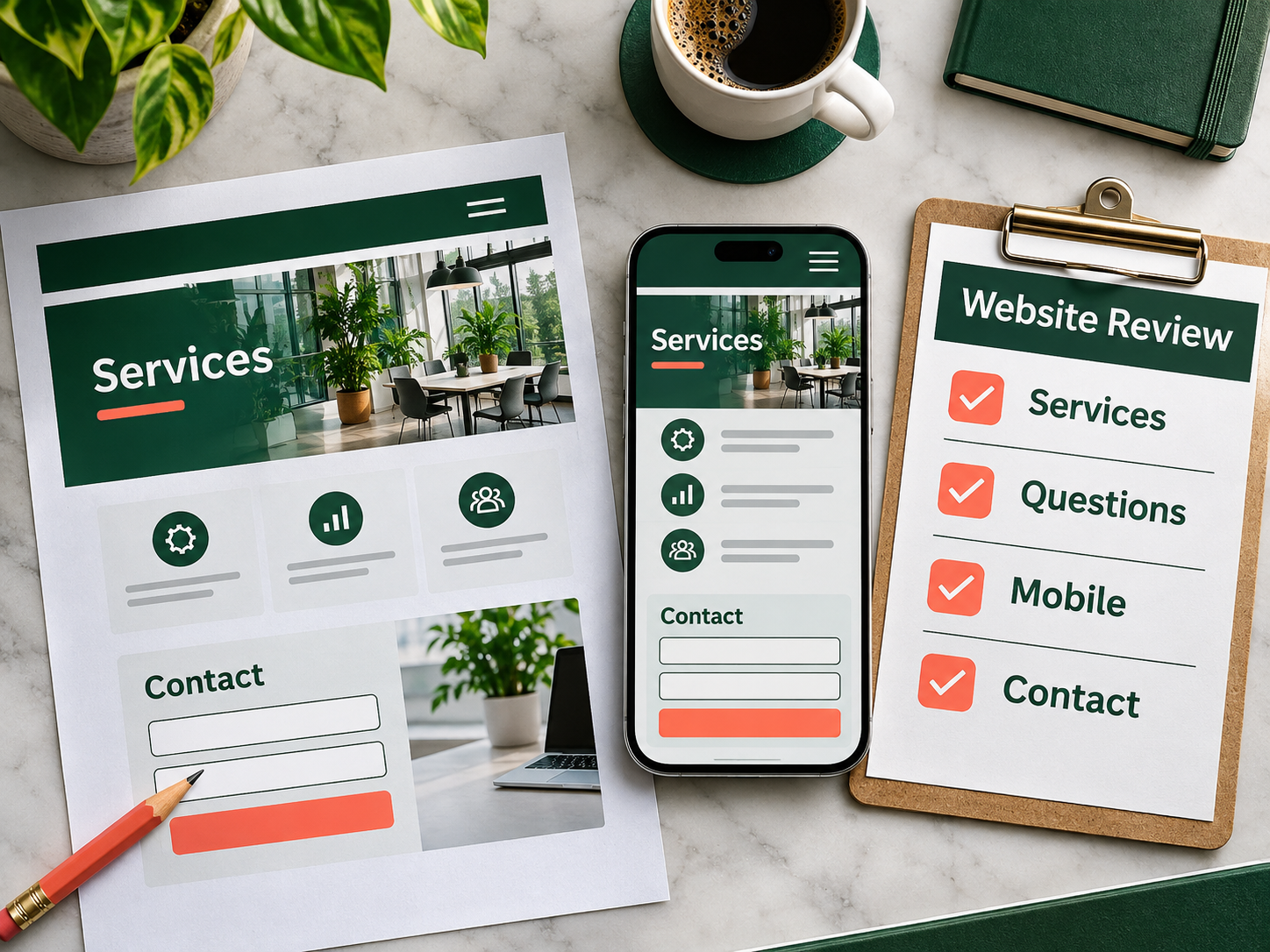
Choose work according to the site's actual problems. A business with thin service pages needs substantive content. A site with confusing navigation needs a clearer route to its services. If visitors can find the right page but struggle to use it on a phone, mobile performance deserves attention.
An initial review can focus on a few practical questions:
- Can visitors find a focused page for each core service?
- Do those pages answer common customer questions?
- Can people use the site comfortably on a phone?
- Is the enquiry or checkout path clear?
At Burst Online, we review the website alongside marketing, data and the systems behind it. That wider view helps connect a visibility problem with what happens after someone arrives. An audit can identify a sequence of improvements without assuming that every business needs a complete rebuild.
Measure Useful Progress and Keep Improving

Visibility needs a useful destination. Traffic alone does not explain whether visitors understand the offer or reach an enquiry. Review search visibility together with page experience and conversion paths, so the team can see which changes support the business's goals.
For an online store, product information, feeds and checkout can matter alongside content. For a service business, clear service pages and an obvious contact route deserve similar attention. The right priorities depend on what the website needs to do, rather than which acronym attracts the most discussion.
Build the work into an ongoing review. Keep pages current, check tracking and revisit areas where people meet friction. Burst Online combines development, marketing and analytics support, allowing technical improvements and content decisions to inform the same plan.
Frequently Asked Questions
Should a Business Stop SEO and Focus Only on GEO?
No. Clear, accessible pages remain the foundation. GEO work can develop the same content and credibility signals while SEO continues to address search visibility and technical health.
Does AEO Mean Adding More FAQs?
Only when those questions help customers. Direct answers within relevant service pages can be more useful than a large FAQ section that repeats information.
Do These Improvements Require a New Website?
Not always. Existing sites may benefit from content updates, technical cleanup, better internal links and clearer enquiry paths. Review the current site before deciding on a rebuild.
Can Optimization Guarantee AI Recommendations?
No. Improving the information available on a website does not guarantee that an external search or AI system will include or recommend the business.
Final Takeaway
Start with the website customers already use. Make its services understandable, resolve unanswered questions and fix the obstacles that interrupt a visit. SEO, AEO and GEO can then support a shared improvement plan instead of competing for attention. A website visibility audit helps connect those decisions to your business goals and existing systems. Work through the priorities in a sensible order, measure what changes and keep the information current. The aim is a site that people can find, understand and use with confidence, supported by accurate content and technical work that serves a clear purpose.
Note: This article provides general guidance on SEO, AEO and GEO. Priorities and results depend on your website, content, technical setup and business goals. Visit Burst Online to discuss your project.


Member discussion