
How to Connect Your Online Store to Inventory, Accounting, and Fulfillment Systems
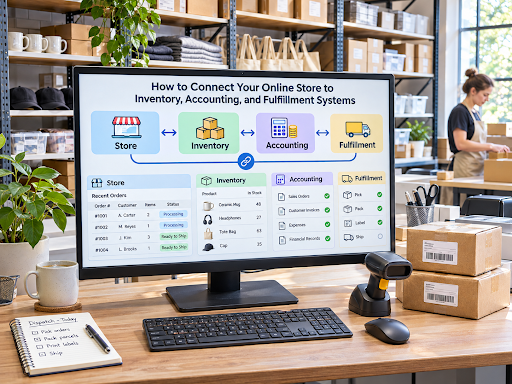
An order can look complete on the storefront while the work behind it has barely started. The inventory team needs the product information, finance needs dependable records and fulfillment needs a clear handoff. Improving your online store means looking at those connections together. Before choosing software or commissioning an integration, establish which systems already support the business and where people still bridge the gaps. A useful plan follows the order beyond checkout. It also leaves room to check the work before the new connections become part of everyday operations.
Map the Systems Behind the Storefront
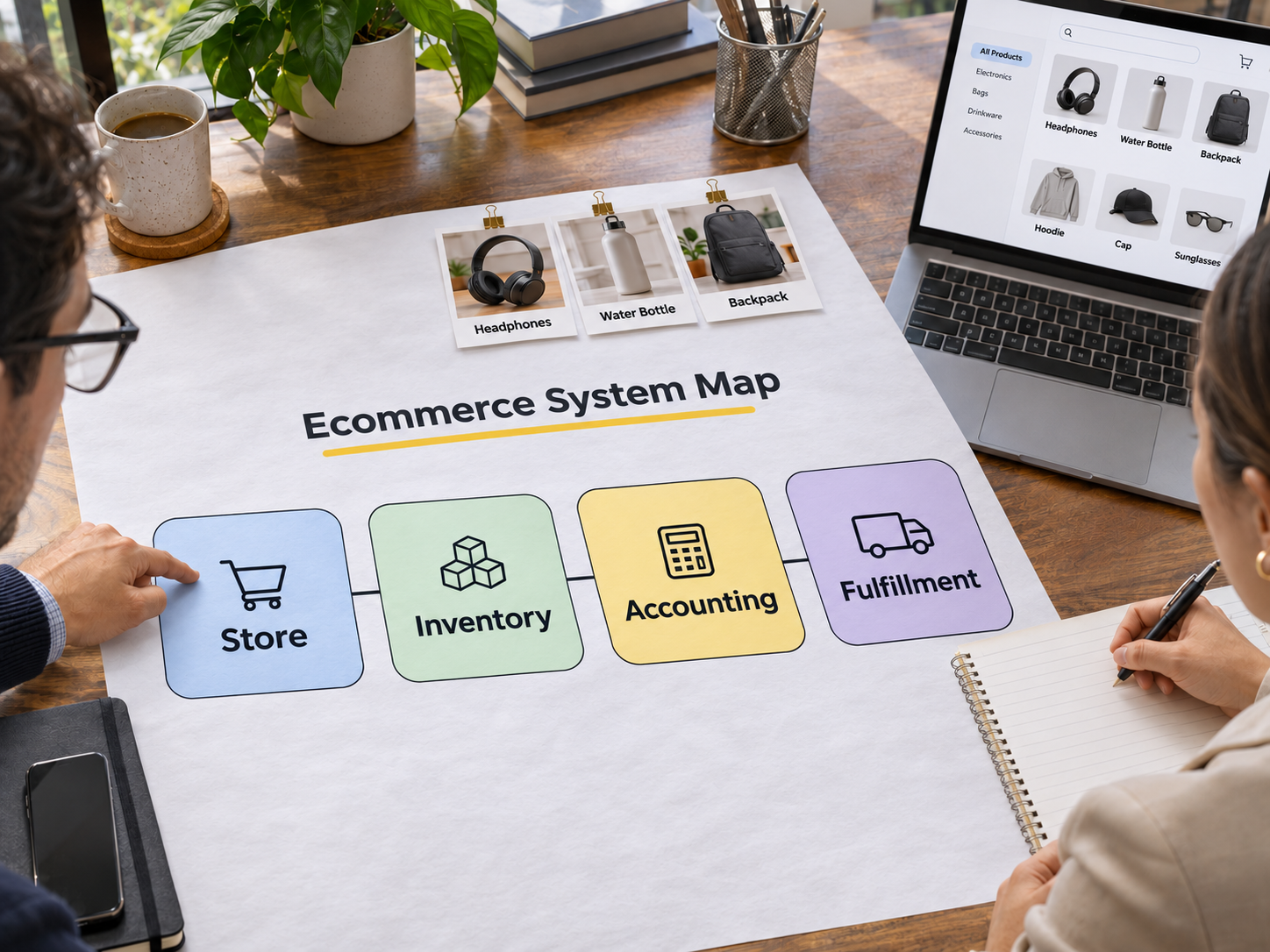
Start with the systems the business actually uses. List the storefront alongside the tools for inventory, accounting and fulfillment, then identify the work that passes between them. This gives the integration discussion a practical starting point and keeps the website connected to the wider project.
At Burst Online, our planning starts with goals, systems, data and constraints. We map dependencies before build work begins. For an online retailer, that means the operating systems deserve attention alongside the pages customers see. A change to one part of the business may need coordination elsewhere.
Describe the problem in business terms before selecting a technical answer. Explain where information needs to move, who uses it and what the current process prevents them from doing. That gives the planning conversation a purpose and helps keep the project focused on the work the connection needs to support.
Give Inventory and Product Data a Clear Place in the Plan

Inventory belongs in the integration discussion from the beginning. Our eCommerce work covers the operating layer around catalog, inventory, fulfillment and reporting. Treating these areas together helps define the relationship between the storefront and the systems supporting it.
Product data deserves its own review. Our platform-performance guidance includes clean product data and product-feed management alongside database performance. A connection cannot be judged only by whether information moves; the business also needs to understand the information it is asking the connected systems to use.
Include the catalog and the people responsible for it in the project discussion. Review how the existing product information supports the store and where a feed or backend process fits. Keep the scope concrete rather than assuming that every catalog needs the same integration design.
Include Accounting in the Operational Conversation

Accounting can become an afterthought when a project starts with storefront design. It belongs in the initial systems review. Our integration scope includes accounting alongside ERP and warehouse systems, so finance requirements can inform the plan rather than arrive after the store changes.
The practical aim is continuity across the business. Our portfolio includes eCommerce work that considers ERP, order management, finance and operations together. That experience highlights a useful planning question: how will the proposed change fit the processes that the business still needs to run?
Bring the people responsible for finance into the discussion of requirements and rollout. Identify the records and existing systems they depend on, and agree what the project must preserve. A shared understanding makes it easier to assess a proposal than a list of software names without operational context.
Connect Fulfillment to the Order Journey

Fulfillment continues the order journey after checkout. It therefore needs a place in the integration scope, not simply a mention at the end of a website brief. Our work includes 3PL, warehouse and related operating systems as part of the wider commerce environment.
Our portfolio also includes custom application work involving warehouse systems and shipping APIs. The relevant lesson is to examine the complete workflow and the systems involved. A retailer with an existing warehouse process may have different requirements from a business coordinating work with an outside fulfillment partner.
- Storefront and order-management requirements.
- Warehouse or fulfillment-partner systems.
- The reporting needed to understand the workflow.
Review, Test and Improve the Connections
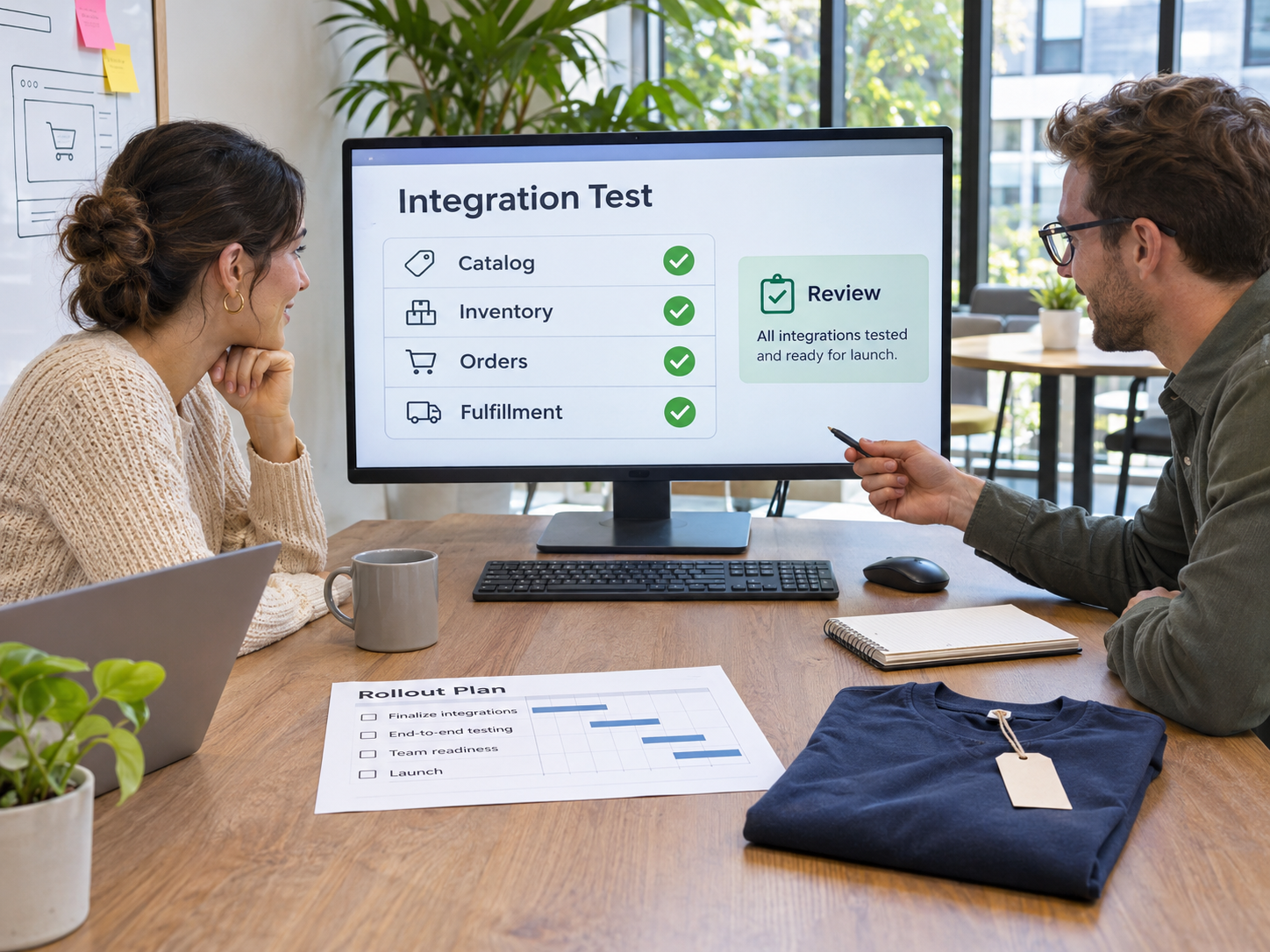
A technical review gives the project a defined starting point. Our audit considers checkout and product feeds as well as ERP, CRM, 3PL and automation gaps. It also looks at tracking quality and maintenance, which helps put integration work in the context of the wider website.
Our delivery process moves through discovery, architecture, development and quality assurance before a phased launch. The purpose of those stages is to define the work, check it and introduce it deliberately. Ask what each phase will demonstrate and how the team will assess whether the agreed requirements have been met.
Keep a place for review after launch. Measurement and ongoing improvement are part of the operating model, alongside keeping systems healthy. The useful result is a connection the business can understand and maintain, with a clear relationship to its goals rather than an integration treated as finished the moment it goes live.
Frequently Asked Questions
Should We Choose the Integration Software First?
Begin with the business goals, existing systems and workflow requirements. Architecture and technical choices should follow that review.
Can Accounting Be Included Alongside Inventory and Fulfillment?
Yes. Burst Online lists accounting, ERP, warehouse and 3PL connections within its integration work. The specific scope depends on the systems involved.
Do We Need to Replace the Whole Online Store?
A review should establish what the existing platform needs. Burst Online works on improving existing systems as well as development projects; a replacement should not be assumed before assessment.
What Should We Bring to an Initial Review?
Bring the website, the systems the business uses and a clear description of what you want to improve. Those are the starting points requested in Burst Online's audit process.
Final Takeaway
Connecting the operating systems behind an online store starts with a clear view of the business. Map inventory, finance and fulfillment alongside checkout, then identify the information and processes each team depends on. Use that review to define the integration scope and a phased way to test it. Keep the catalog, reporting and ongoing maintenance in the conversation rather than treating them as separate concerns. At Burst Online, we bring development and systems work into that wider view. The aim is a practical plan that supports the business you run, with requirements your team can explain and outcomes it can assess.
Note: This article provides general information about digital marketing, websites and AI-enabled services. Recommendations and outcomes depend on your goals, audience, data and systems. Visit Burst Online to discuss guidance suited to your business.




Member discussion