
Gear and Gearbox Design for Defense and Mission-Critical Equipment
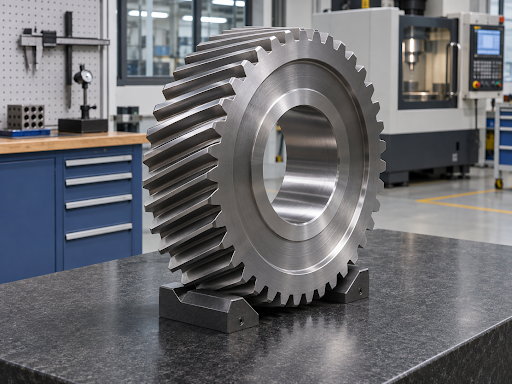
A gearbox can meet a space requirement and still leave important operating questions unanswered. What loads must it carry? How will the team inspect it? What happens when an original component becomes unavailable? Gear and gearbox design for mission-critical equipment starts with those practical requirements. For defense-related applications, project-specific qualification adds another layer that a general product description cannot settle. Use these design considerations to frame the engineering discussion. An industrial gearbox's capabilities alone do not establish that it meets a particular defense specification.
Define the Operating Requirements First
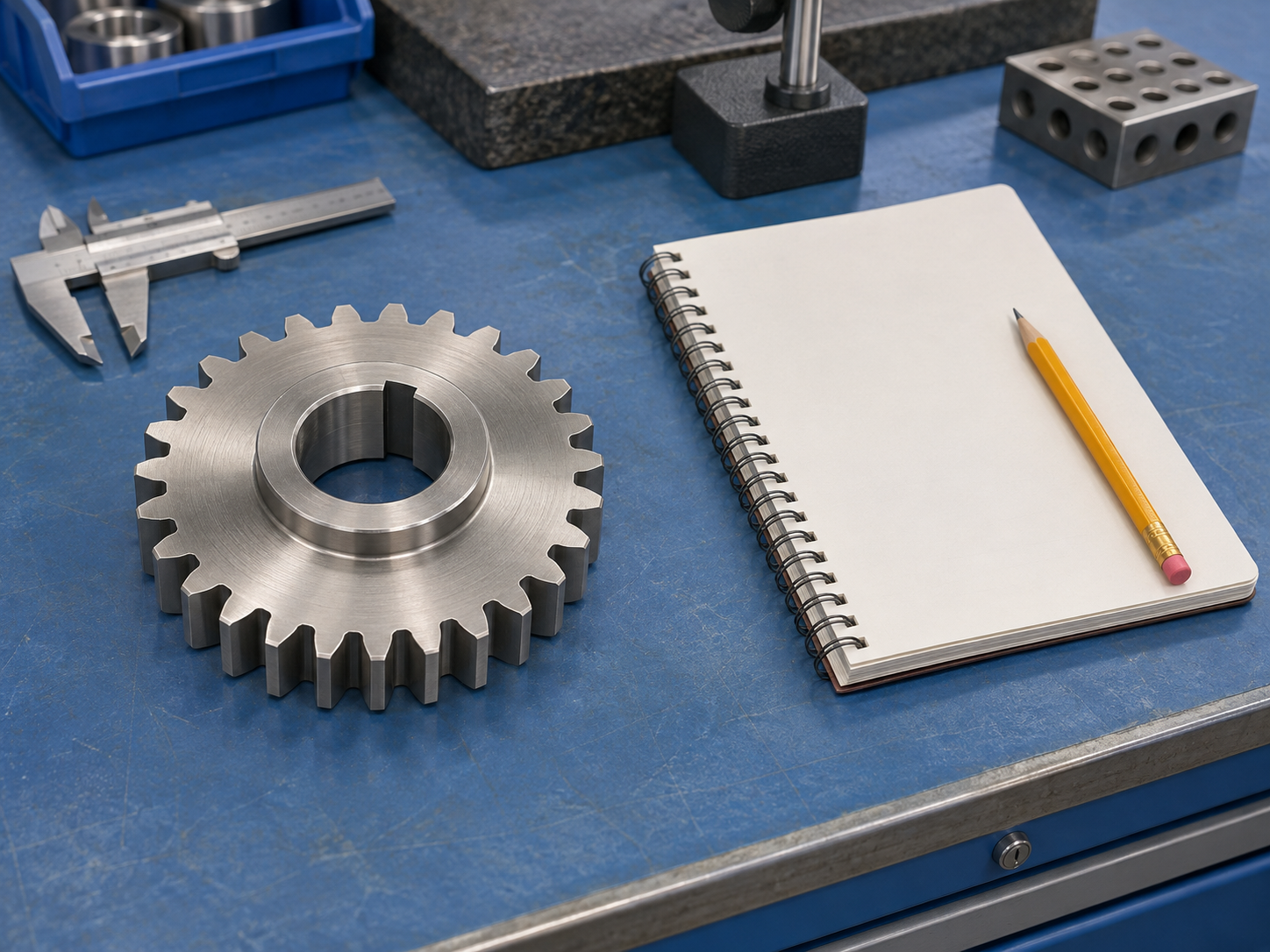
Begin with the work the drive must perform and the equipment around it. A request for a strong gearbox leaves the designer with too little information. Shaft arrangement, the required ratio and the connections to existing equipment give the discussion a more concrete starting point.
Overton Chicago Gear builds made-to-order gearboxes to customer specifications and offers special ratios and drop-in replacements. The application brief matters: the design has to fit a particular job and installation, rather than a general description of reliability.
For a defense or other mission-critical project, distinguish the engineering brief from the acceptance requirements. Confirm the required documentation, testing and qualification with the project team. The industrial capabilities described here do not establish approval for a particular defense program.
Choose a Gear Arrangement That Fits the Equipment
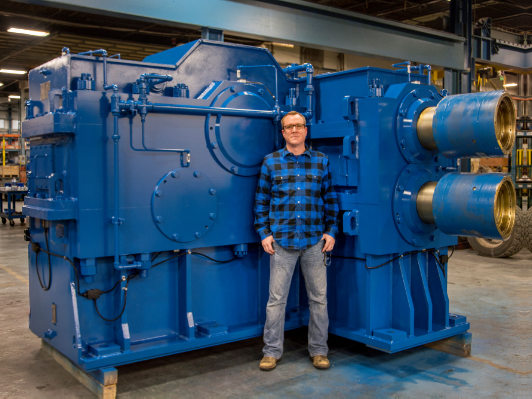
The positions of the input and output shafts shape the gearbox layout. Standard, right-angle and parallel-shaft configurations address different connection arrangements. The choice should follow the installation and transmission requirements instead of the appearance of a familiar gearbox.
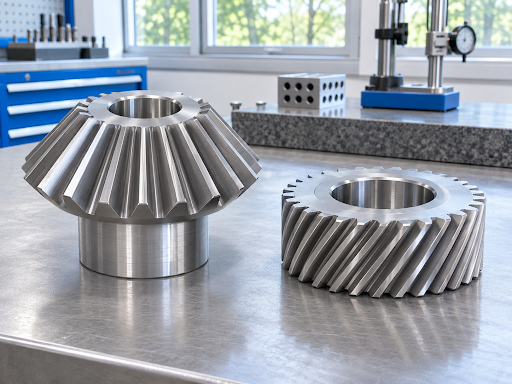
OCG's listed design capabilities include helical, bevel-helical and planetary gearboxes with customer-specified shaft configurations. Its engineering work also includes mechanisms such as shifters, clutches, differentials and backlash limiters when the application calls for them.
Treat those capabilities as options to evaluate, not features every drive needs. Establish which functions belong in the system before adding complexity. An existing installation may also require a replacement to retain its equipment connections, making the external fit as important as the internal arrangement.
Consider Geometry, Materials and Processing Together
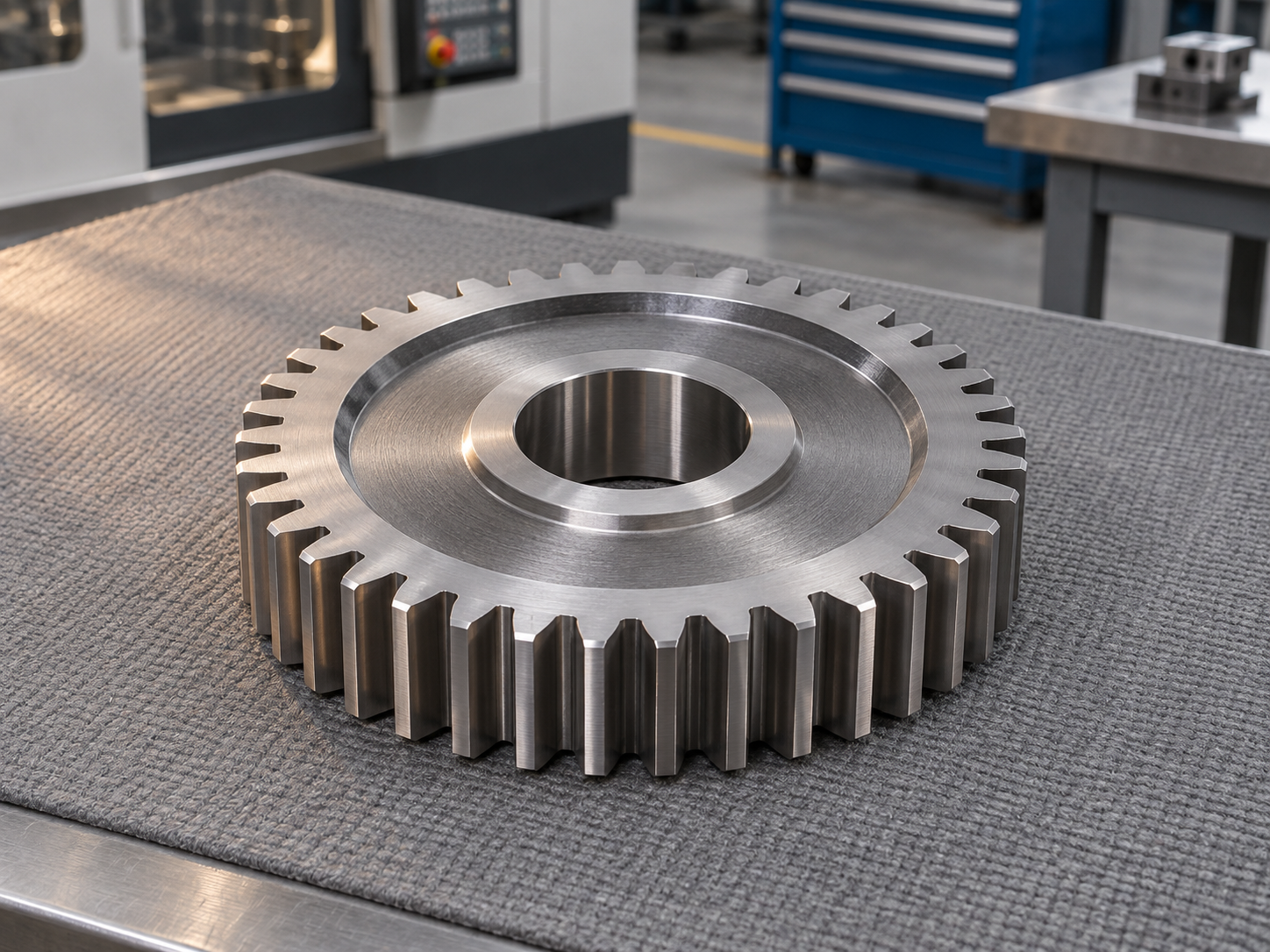
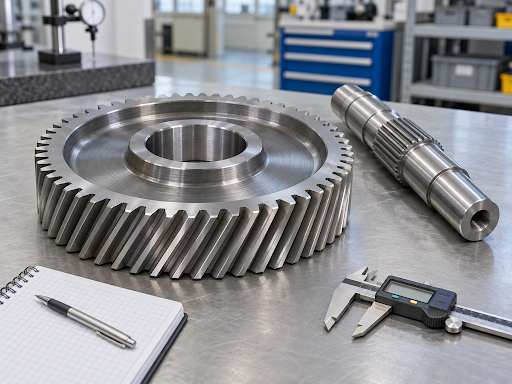
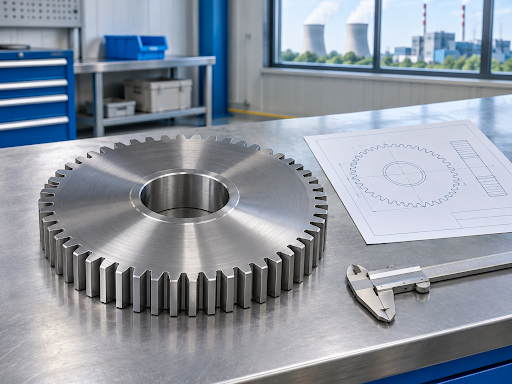
A gear's visible shape tells only part of its design story. The tooth geometry, material and processing choices need to work together for the intended application. Selecting one of those elements in isolation gives an incomplete picture of the component.
OCG describes adjusting gear geometry and using different materials and processing methods during rebuild work. Its services also include heat-treatment and profile changes when engineers develop replacement components. Those are project-specific decisions, not a universal recipe for improving every gearbox.
Ask how the proposed component relates to the original requirement and what evidence will support the change. Avoid assuming that a different material or a revised profile automatically delivers a better result. The design review and agreed checks need to establish that relationship.
Plan Lubrication and Maintenance Access
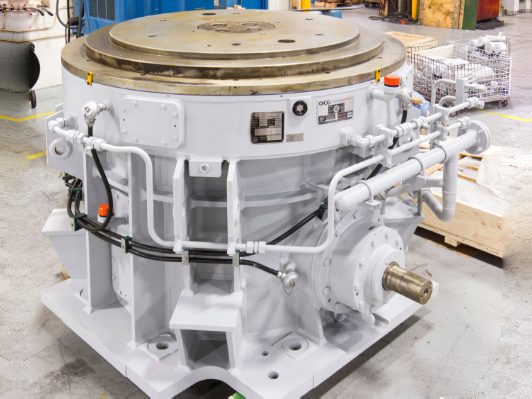
Lubrication belongs in the gearbox discussion from the start. OCG can incorporate shaft-driven or motor-driven pressurized systems within the housing or on a separate skid. Its description identifies temperature control and lubrication of isolated components among the purposes of those arrangements.
Condition monitoring is another available capability. It can form part of a new system or an addition to an existing shell, giving operators information that supports maintenance planning. The appropriate arrangement depends on the equipment and its operating conditions.
Discuss how the people responsible for the drive will inspect and maintain it. A proposal should make those responsibilities clear alongside the mechanical design. Monitoring equipment does not remove the need for an agreed maintenance approach or establish that a drive cannot fail.
Agree on Testing and Long-Term Support
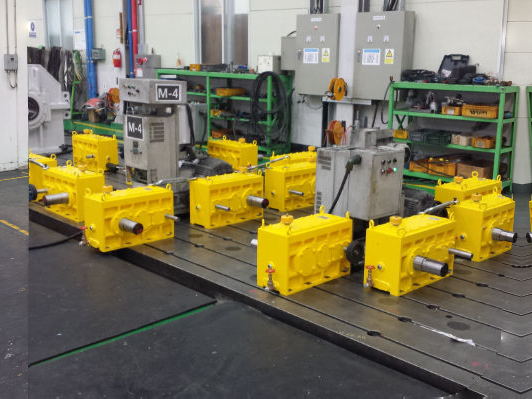
A finished gearbox still needs checks that match the agreed scope. OCG lists no-load testing as standard for its rebuild work and full-load testing when required. These are different activities, so a project team should specify what it expects rather than assuming one description covers every acceptance need.
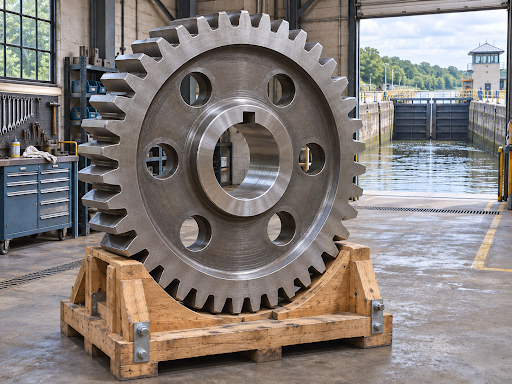
Long-term support also matters when original equipment becomes difficult to maintain. Reverse engineering, spare parts and replacement rotating components can help address an unsupported drive. A drop-in replacement may preserve existing connections, while a rebuild can retain suitable components after assessment.
Ask which route fits the condition of the equipment and the requirements of the project. Repair, replacement and redesign involve different decisions. For defense-related equipment, confirm the program's own acceptance and qualification requirements separately; a general industrial service list does not substitute for them.
Frequently Asked Questions
Does an Industrial Gearbox Automatically Meet Defense Requirements?
No. A project team must establish the applicable specifications, documentation, testing and qualification. A general industrial capability statement does not demonstrate approval for a particular program.
Can a Replacement Keep the Existing Equipment Connections?
OCG offers drop-in replacement design and describes preserving equipment connections. Whether that route suits a particular installation requires engineering review.
Is Full-Load Testing Included in Every Rebuild?
The website lists no-load testing as standard and full-load testing as required. Agree on the testing scope for the specific project.
Final Takeaway
Reliable gear and gearbox design begins with a clear description of the work, the installation and the checks the equipment must pass. Shaft layout, gear geometry, materials and lubrication all contribute to that discussion, while maintenance and replacement planning keep the design connected to its working life. Overton Chicago Gear's documented industrial services provide a starting point for reviewing those needs. For defense and other mission-critical projects, keep qualification and acceptance requirements explicit. That makes it easier to distinguish an available engineering capability from evidence that a particular design meets the project's demands.
Note: We share gearing and power-transmission information for general guidance. Suitability depends on the equipment and its operating conditions. AI-generated images illustrate gear designs, not specific OCG products or projects. For current capabilities and project-specific guidance, visit Overton Chicago Gear.

Member discussion