
How to Measure Website Traffic and Leads From AI Search
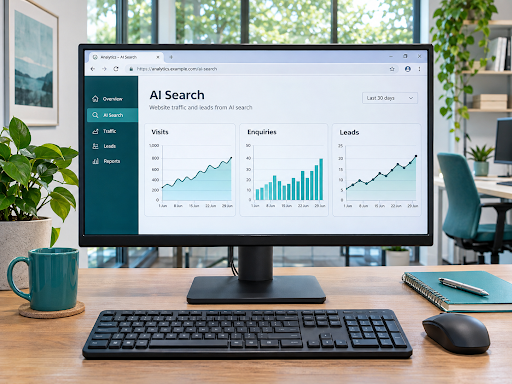
An AI-search mention and a genuine sales enquiry tell you different things about your website. One suggests that people may encounter your business; the other gives your team a conversation to follow up. Measuring website traffic and leads starts with keeping those outcomes separate. Before building another report, decide what your business needs to learn, which actions count as enquiries and whether your existing tracking can answer those questions. A useful measurement plan connects visibility work with what visitors actually do after reaching your site.
Define the Outcomes Before Building the Report

Start with the decision your report needs to support. You might want to know whether a service page attracts suitable visitors or whether a clearer enquiry path helps people contact you. Write that question down before choosing charts. Otherwise, a dashboard can collect plenty of activity without helping anyone decide what to improve.
Separate visibility, visits and completed enquiries in your reporting plan. Do not use a mention of the business as a substitute for a website visit, or a visit as a substitute for a lead. Keeping these categories distinct makes the report easier to discuss with colleagues who do not spend their day inside analytics tools.
Decide which enquiries matter to your business. A quote request, consultation request or direct question may each deserve attention, but they represent different intentions. Use descriptions that your marketing and sales teams understand in the same way, then keep those definitions consistent when reviewing results.
Review Tracking Quality Before Trusting the Numbers
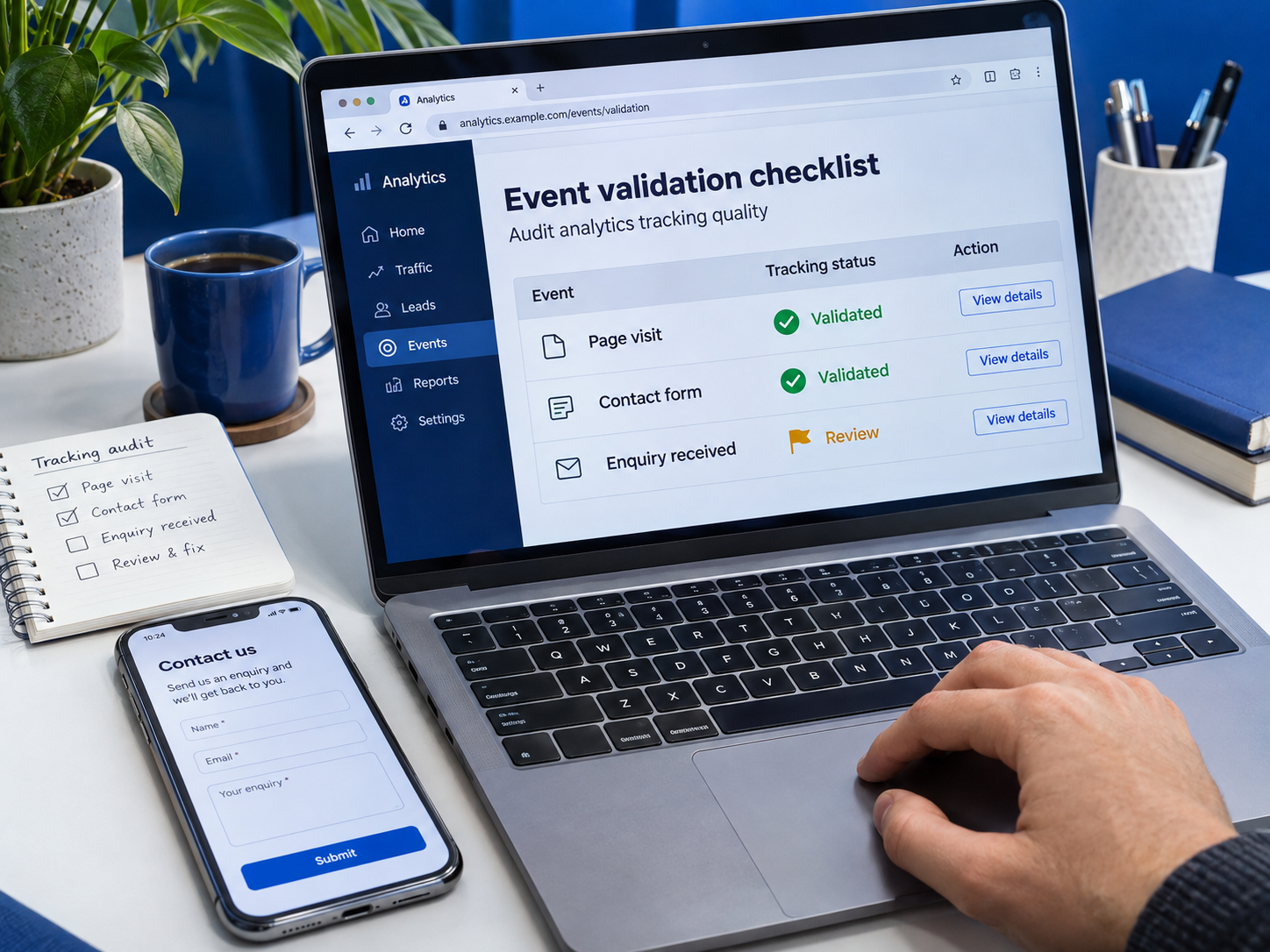
A measurement project should begin with an audit of the tracking already in place. Our audit considers analytics and tracking quality alongside the website and its conversion paths. That gives the work a practical starting point: establish what the current setup can support before asking it for a more detailed explanation of AI-search performance.
Have the team responsible for analytics review how visits and enquiries enter the report. Ask them to distinguish what the setup records directly from conclusions that require interpretation. Avoid giving a chart a precise-sounding label unless the underlying information supports that description.
Keep a written record of unresolved tracking questions. A reporting gap is something to investigate, not a reason to fill the report with an assumed result. Make those limitations visible to the people making decisions so they can judge the figures in context.
Connect Useful Landing Pages With Clear Enquiry Paths
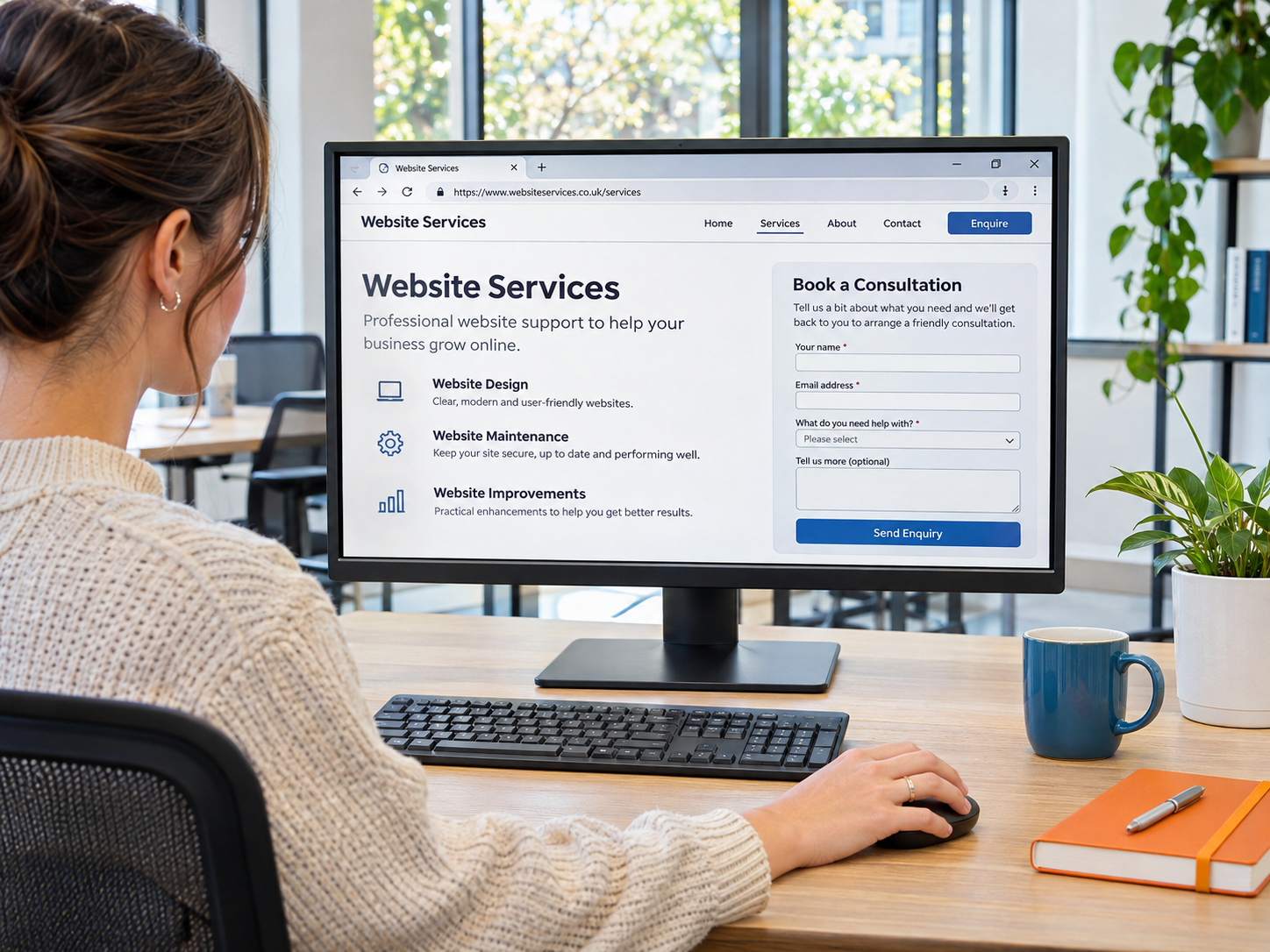
Traffic becomes more useful when visitors arrive on a page that answers their question. A focused service page should explain what you offer and make the next step clear. If the page leaves those questions unanswered, a traffic total alone will not tell you what stopped someone from contacting the business.
Review the route from the page to a quote request, consultation or question. Look for confusing navigation, weak service explanations and calls to action that fail to explain what happens next. These are concrete website issues a visibility audit can examine alongside technical performance and mobile usability.
Choose one page or enquiry route to improve first. Keep a record of the change and the business question behind it. This gives the next reporting conversation a specific subject instead of turning every movement in website activity into a broad claim about AI search.
Review Enquiries Alongside Website Activity

Bring the people who handle enquiries into the review. They can explain what a potential customer actually asked for and whether the request matches the services you offer. This adds useful context to a marketing discussion that might otherwise stop at visits and form activity.
Our work connects websites with operating systems, including CRM and reporting. When planning measurement, discuss which information needs to reach those systems and who will use it. The goal is a report that supports the team's follow-up work rather than a separate set of numbers nobody owns.
Useful review questions include:
- Which service or product did the enquiry concern?
- Did the website give the visitor enough information to take the next step?
- What information would help the team handle the enquiry more effectively?
Treat these as questions for your own review, not as a claim that every answer already exists in your analytics account. Agree on a manageable process and improve it as your team learns what information it needs.
Use Findings to Prioritize the Next Website Improvement
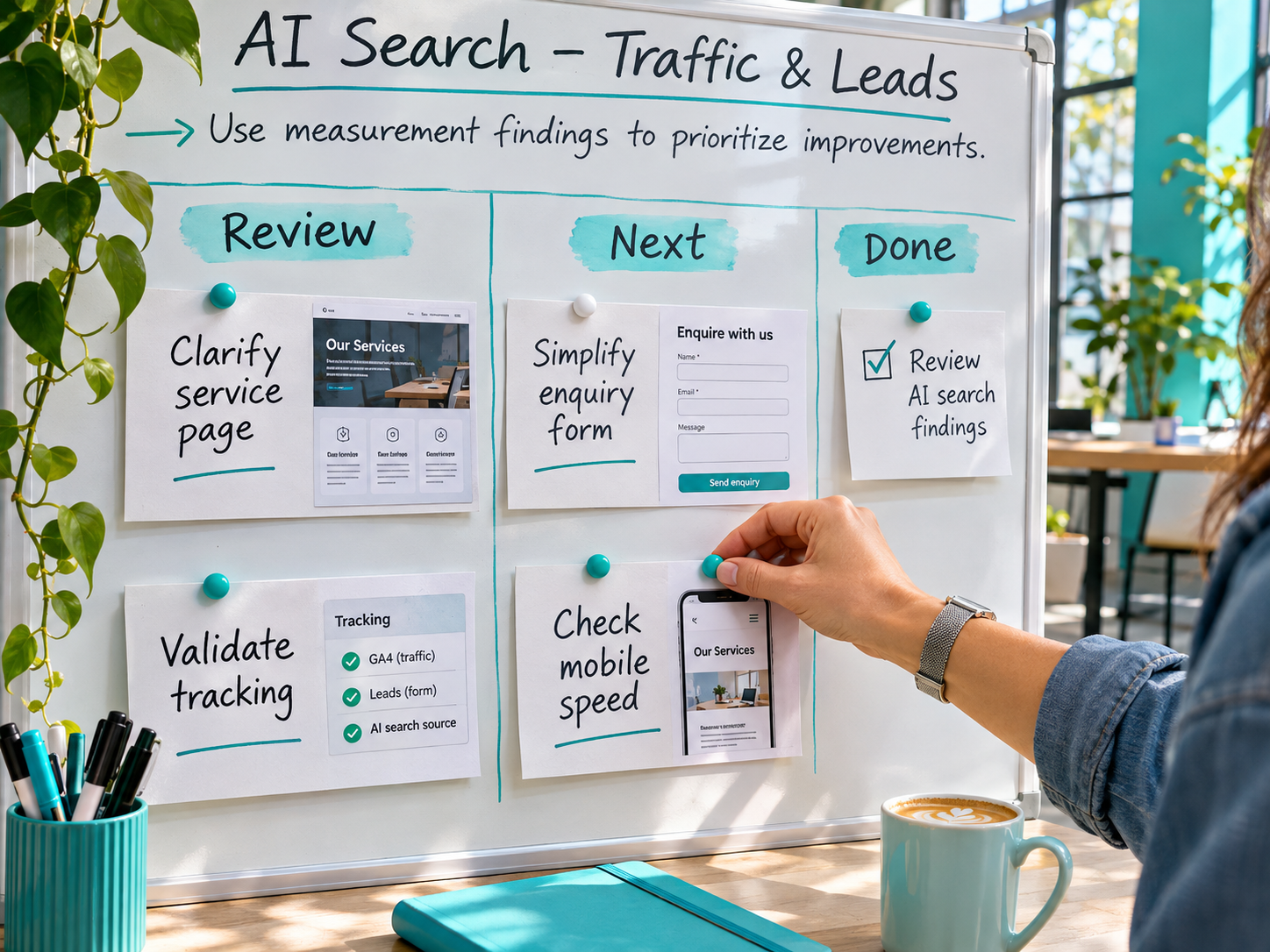
Use the report to choose a specific next step. If a service page lacks detail, improve that page. If visitors cannot find how to enquire, review the conversion path. If the tracking is unclear, resolve that uncertainty before using the figures to justify a larger change.
SEO, answer-focused content and technical performance belong in the same discussion. Clear service pages, useful customer answers and a website that works well on mobile support the experience people have when they find you. Avoid treating AI-search measurement as an isolated exercise detached from those fundamentals.
Choose a review routine your team can maintain. Record the question, the evidence available, the change you make and what you need to examine next. This keeps improvement work connected to business goals without promising that a single audit or edit will produce a guaranteed traffic increase.
Frequently Asked Questions
Is an AI-Search Mention the Same as a Lead?
No. Keep visibility and completed enquiries separate in your measurement plan. Define the actions your business will count as leads before preparing the report.
Should We Start With a New Dashboard?
Start by reviewing your goals and existing tracking. Build or change the reporting setup once you know which questions it needs to answer.
What Can Burst Online Review?
Our audit covers website performance, SEO/AEO visibility, conversion paths, analytics and tracking quality, as well as relevant system connections.
Does This Require a Complete Website Rebuild?
Not necessarily. Focused content improvements, technical cleanup and clearer enquiry paths may be appropriate. The next step depends on what the audit finds.
Final Takeaway
Build your AI-search measurement around questions the business can act on. Keep visibility, website activity and enquiries distinct, check the tracking behind the report and involve the team that handles potential customers. Then use the findings to choose a focused improvement to your content, technical setup or conversion path. A website audit can help establish that starting point, but the value comes from what you do with the findings. Keep your definitions consistent, document the changes you make and be honest about gaps in the evidence. That gives the next review a clearer basis for deciding where to spend your effort.
Note: This article provides general information about digital marketing, websites and AI-enabled services. Recommendations and outcomes depend on your goals, audience, data and systems. Visit Burst Online to discuss guidance suited to your business.



Member discussion