
How Reliable Gearing Supports Mining and Crushing Equipment
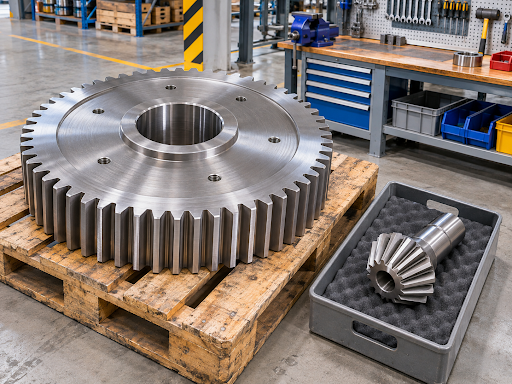
Mining equipment puts gearing at the centre of demanding work, from moving material to driving a crusher. When a component needs attention, the useful questions go beyond its outward appearance. What duty must it perform? Which dimensions must a replacement preserve? What does inspection show about its condition? Reliable gearing starts with those details and carries them through manufacturing, heat treatment and verification. For a maintenance team, understanding that process makes discussions about a new or replacement component more specific and more useful.
Matching Gear Types to the Mining Application
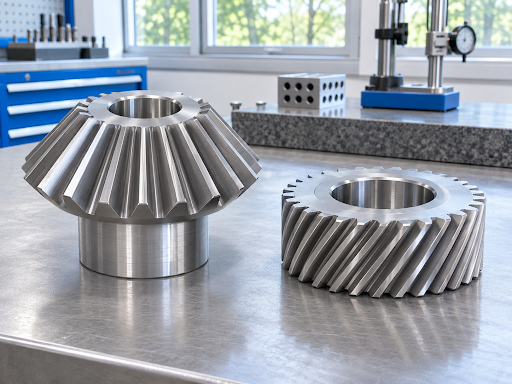
Different machines call for different gearing. Our mining capabilities include bevel gears for cone and aggregate crushers, alongside spur and helical gearing used in equipment such as earthmoving trucks, kilns and shovels. That range makes the application the starting point. A crusher component and a gear for another mining machine should not be treated as interchangeable simply because both operate at the same site.
The work also extends beyond a single gear wheel. Geared and splined shafts, ring gears, girth-gear segments and planet carriers can form part of the requirement. Identifying the component accurately helps define what information the engineering team needs and which capabilities apply.
Begin the conversation with the equipment and the component's role in it. Bring the available drawings and operating context into that discussion. This gives the engineering team a clearer problem to assess than a general request for a stronger gear, which leaves the actual requirement undefined.
Carrying the Requirement Through Manufacturing
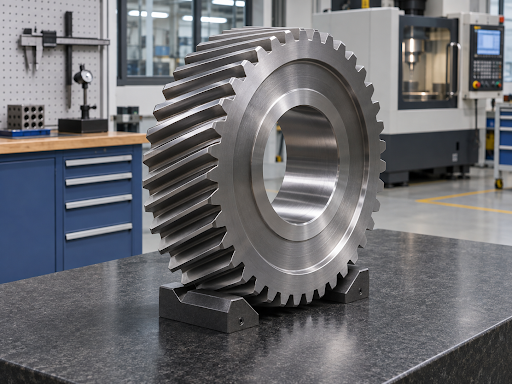
Open-gearing production can involve milling, grinding and hard cutting. These are distinct capabilities within a manufacturing process, not interchangeable labels for a finished component. The appropriate route depends on the part and its engineering requirements. A useful specification connects the intended component with the work needed to produce it.
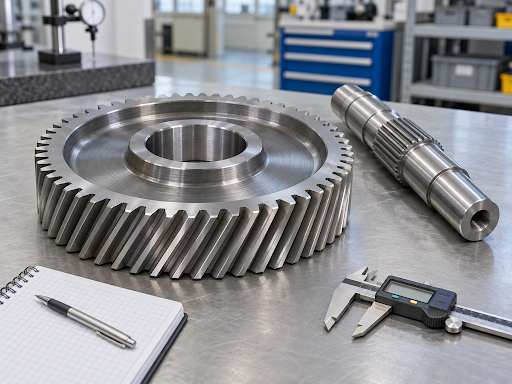
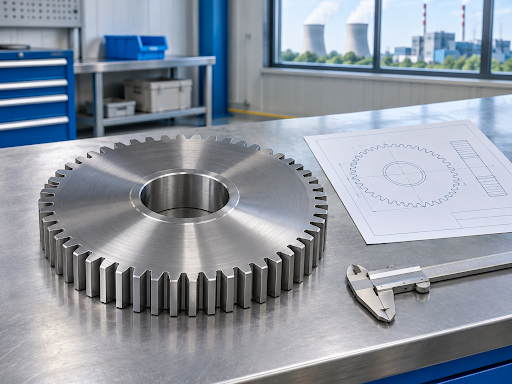
Our open-gearing capabilities combine manufacturing with metrology. That relationship matters when a team needs evidence about the completed component rather than relying on appearance alone. A polished surface or an impressive photograph cannot answer all the questions that a drawing or inspection requirement raises.
For a new order or replacement discussion, make the required information explicit. Ask which drawing revision governs the work and what inspection information will accompany it. Keep the manufacturing discussion tied to the component you need. A general capability description cannot resolve every project detail.
Keeping Heat Treatment Within the Engineering Plan
Heat treatment forms another part of the gearing process. Our capabilities include carburising and press quenching, with monitored process variables and metallurgical laboratory support. These are controlled manufacturing activities that need to align with the component's requirements. They should not become a blanket promise that any treated gear will perform identically in every machine.
Press quenching addresses distortion control during the process. That makes it relevant to the relationship between treatment and the finished component's geometry. The question for a particular job is which process the engineering specification calls for and how the completed work will be checked.
Keep those requirements connected when discussing a replacement. Material, treatment and dimensions belong in the same technical conversation. Avoid selecting a process because its name sounds more advanced; ask the engineering team to explain its role in the specific component and the information needed to verify the work.
Using Inspection to Make the Next Decision
Inspection gives a repair or replacement discussion a factual starting point. Our engineering services include inspection and failure analysis, while our manufacturing capabilities include independent metrology. Each supports a different question: what condition is the existing part in, and how does a manufactured component compare with its requirements?
A maintenance decision should reflect the information available about the actual component. A photograph may show visible damage, but it cannot replace measurements or a project-specific assessment. Keep the observed condition separate from assumptions about the cause until the investigation supports a conclusion.
For the team arranging the work, a practical step is to organise the available component information before the review. Existing drawings, inspection records and the equipment context help frame the discussion. Ask what the examination can establish and what remains uncertain, so the next action follows the evidence rather than an early guess.
Planning Repairs and Replacements Around the Existing Equipment
Our engineering work includes customer-specified designs, new designs and reverse-engineered components. A replacement project may therefore start from different kinds of information. The available part, drawings and equipment requirements shape the route forward, particularly when the objective is to work within an existing installation.
Repair and replacement capabilities are relevant to mining equipment, but the right scope needs assessment. A duplicate component and an improved design are different requests. If a change is under consideration, discuss how it relates to the equipment it must fit rather than assuming an alteration automatically improves the whole system.
Define the project objective early. The team may need a replacement that matches an established requirement, an investigation into a failure, or engineering support for a revised component. Being clear about that objective helps keep inspection, design and production work directed toward the same practical outcome.
Frequently Asked Questions
Are Bevel Gears Relevant to Crushing Equipment?
Yes. Our mining capabilities identify bevel gearing for cone and aggregate crushers. The exact component requirement still depends on the particular machine and project.
Can a Replacement Start From an Existing Component?
Reverse engineering is among our engineering capabilities. The scope depends on the available component, information and project requirements, so it needs a technical assessment.
Does a Manufacturing Capability Guarantee Suitability?
No. A capability describes work that can be considered. Suitability for a specific machine depends on the engineering requirements and operating conditions.
Final Takeaway
Reliable gearing depends on a connected process: define the application, establish the component requirements, carry them through production and check the result. Mining and crushing equipment bring different needs to that process, so a useful discussion begins with the actual machine and the information available about its parts. Our open-gearing capabilities provide a basis for that conversation, alongside inspection, heat treatment and engineering support. Keep repair decisions and replacement requests specific. Clear requirements and a careful review give the project a firmer starting point than assumptions based on a component's appearance alone.
Note: We share gearing and power-transmission information for general guidance. Suitability depends on the equipment and its operating conditions. AI-generated images illustrate gear designs, not specific OCG products or projects. For current capabilities and project-specific guidance, visit Overton Chicago Gear.

Member discussion