
7 Reasons to Use A2 Desi Ghee in Your Skin Health Routine
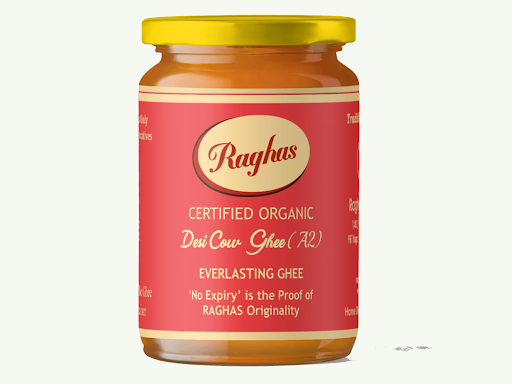
Ghee has a familiar place in many Tamil Nadu kitchens, and it also appears in traditional home-care routines. Interest in A2 desi ghee for skin care often begins with its rich texture and simple ingredient identity. There are sensible questions to ask before moving a kitchen ingredient into your bathroom. The reasons below explain why people consider it, rather than promising seven proven skin benefits. Whether it belongs in your routine depends on your skin, your expectations and how it compares with products made specifically for skin care.
A Rich Texture for Dry-Feeling Skin
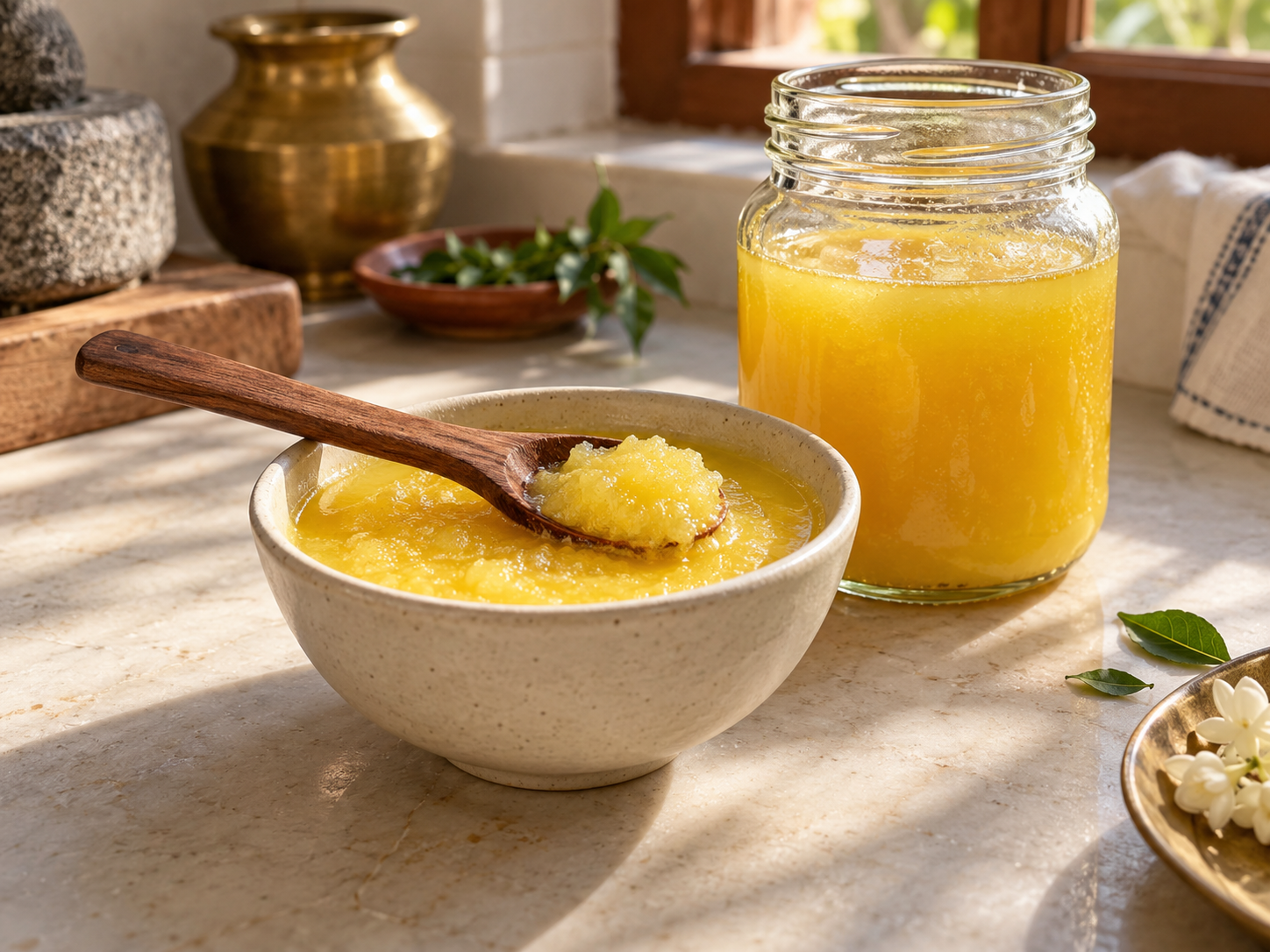
The first reason people consider ghee is the soft, coated feeling a heavy fat can leave on the skin. Traditional use often focuses on dry-feeling areas. That surface sensation should not be confused with evidence that food-grade ghee repairs a damaged skin barrier or treats a skin condition. A fragrance-free cream or ointment formulated for dry skin is a more established starting point.
Focused Care for Rough-Feeling Areas
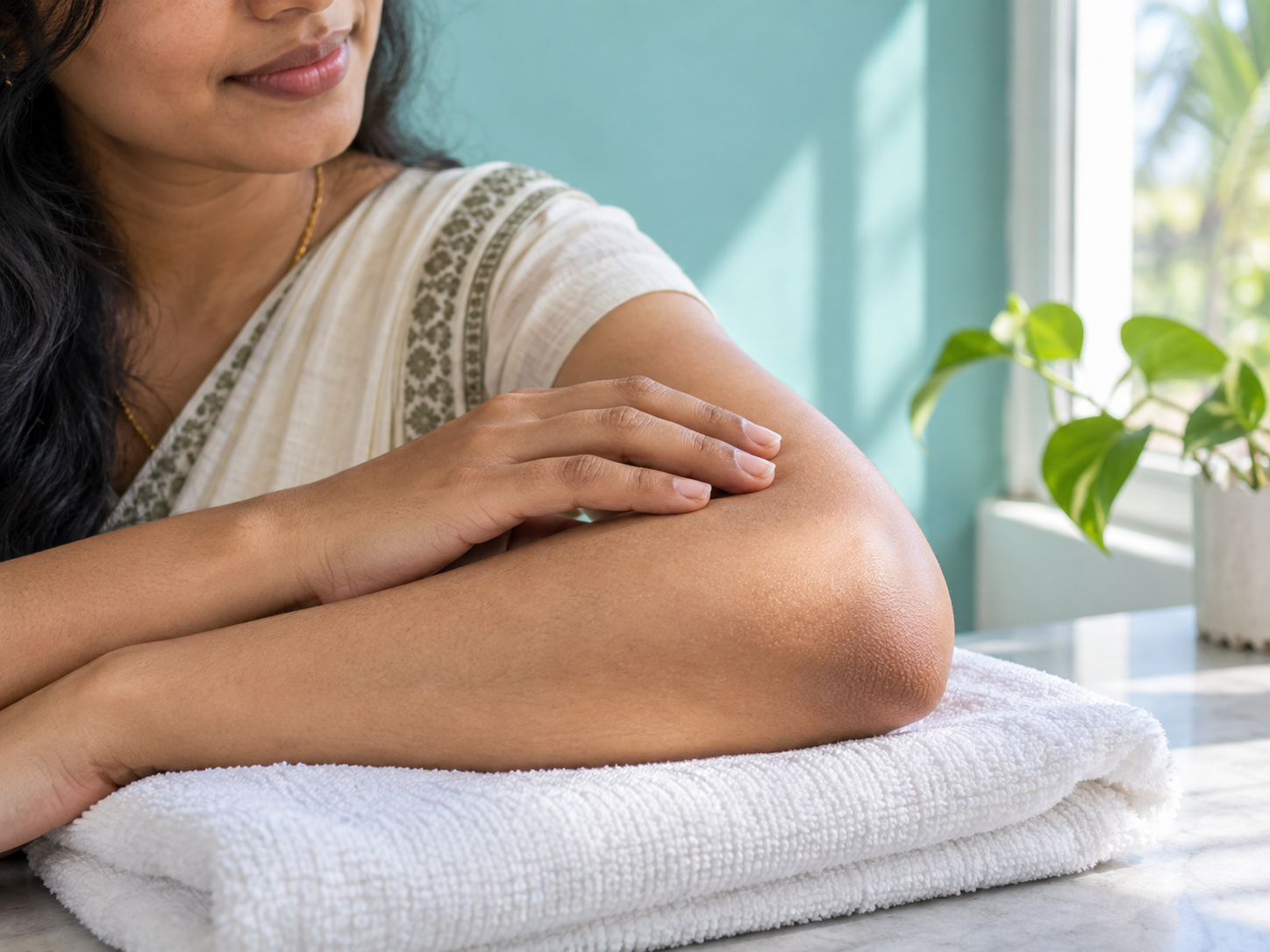
Second comes the interest in focused care for rough-feeling spots, such as elbows. Using something on one small area is different from applying it across the face or body. More is not automatically more helpful, and a heavy layer can feel unpleasant on skin that does not tolerate it.
If you are considering ghee, first think about what you are trying to address. Ordinary dryness and a persistent itchy rash are different problems. Pain, cracking, redness or continuing irritation need appropriate advice rather than repeated experiments with a home ingredient. Do not use ghee on broken skin or as a treatment for burns.
A Traditional Interest in Lip Care
Dry lips are a third reason people ask about ghee. It has a history in home-care practices, but that history does not establish that it works better than a plain lip product formulated for the purpose. Avoid treating repeated soreness, swelling or persistent cracking as something to keep covering with a kitchen ingredient.
A Rich Medium for Gentle Massage
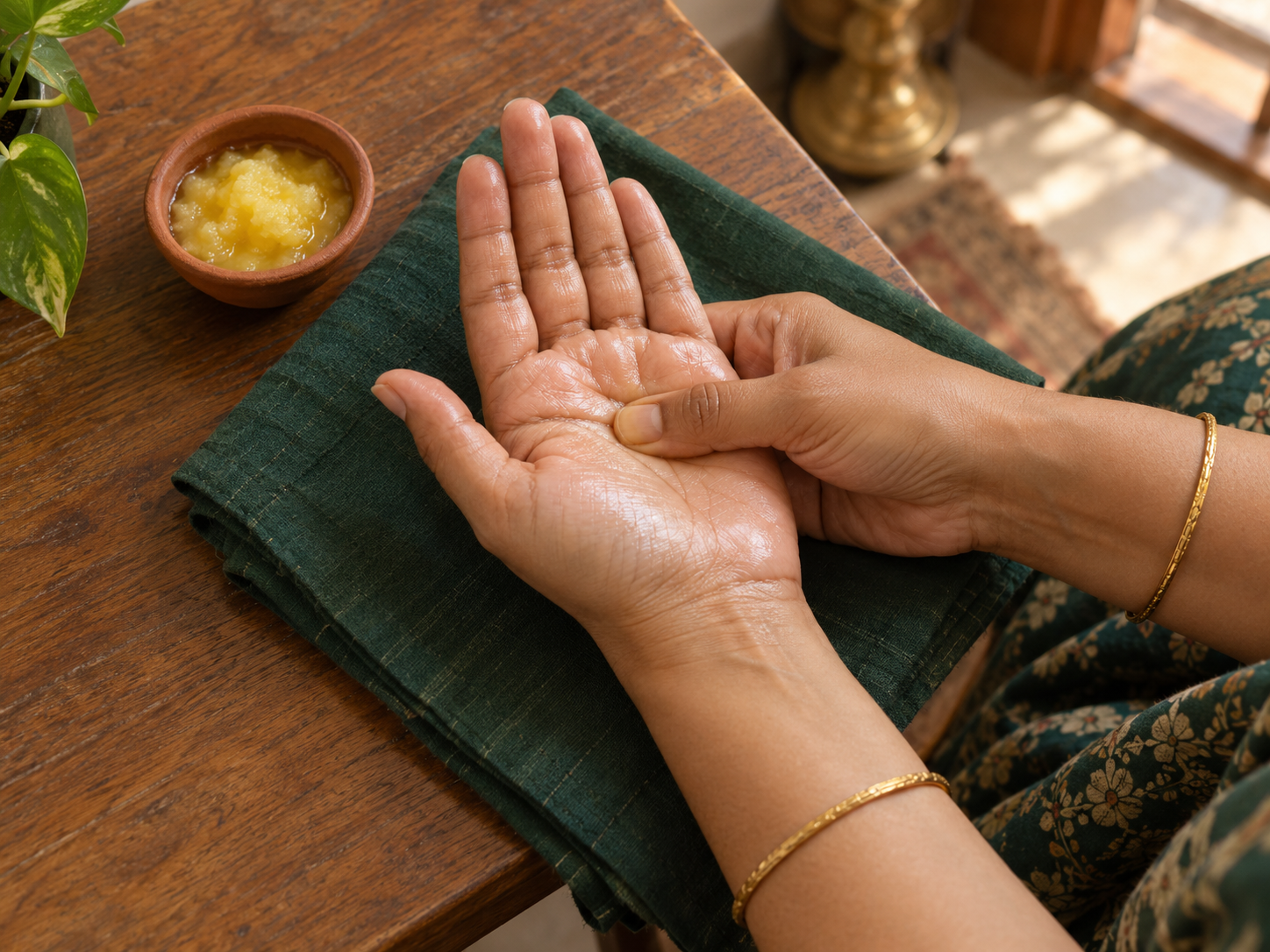
The fourth reason is its use as a heavy medium for gentle massage. Here, the appeal is the texture and the ritual of taking time over a small area. Massage with ghee should not be presented as a way to remove pigmentation, erase wrinkles or stimulate proven collagen growth. Those are separate claims that need stronger evidence.
Keep the routine gentle and stop if the skin reacts. You do not need to mix ghee with lemon, rough scrubs or a collection of additional ingredients to make a home routine feel worthwhile. A more complicated mixture also makes it harder to identify what caused a reaction. For sensitive skin or an existing condition, ask a dermatologist before experimenting.
A Simple Ingredient to Understand
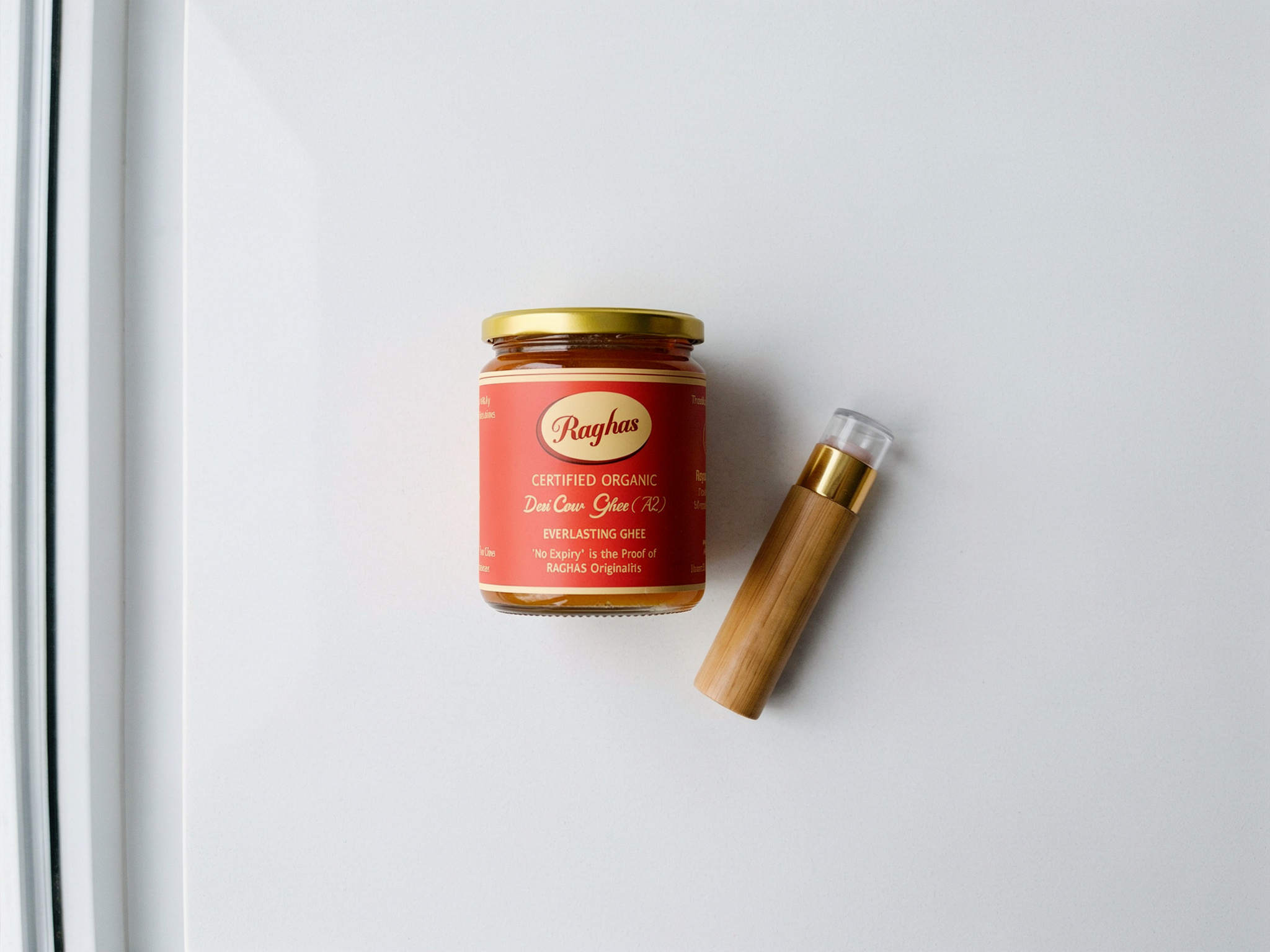
Simplicity is the fifth reason. People who already know ghee as a food may find its ingredient identity easier to understand than a long list of unfamiliar names. That can be a good starting point for asking questions, but familiar and natural do not mean suitable for every skin type.
Food-grade ghee is not the same thing as a finished cosmetic product. It has not automatically been formulated, packaged or tested for your intended skin-care use. The A2 label also does not establish a superior skin benefit. Choosing a food for its milk source is different from demonstrating that it performs better when applied to the skin.
Read the product information and keep your expectations specific. If you have a known milk allergy, do not assume ghee is safe because it is clarified. Ask your clinician about the product and intended use. If a small-area trial causes itching, redness or swelling, stop using it. A reaction is a reason to change course, not a sign that the ingredient is working.
A Familiar Routine With Room for Caution
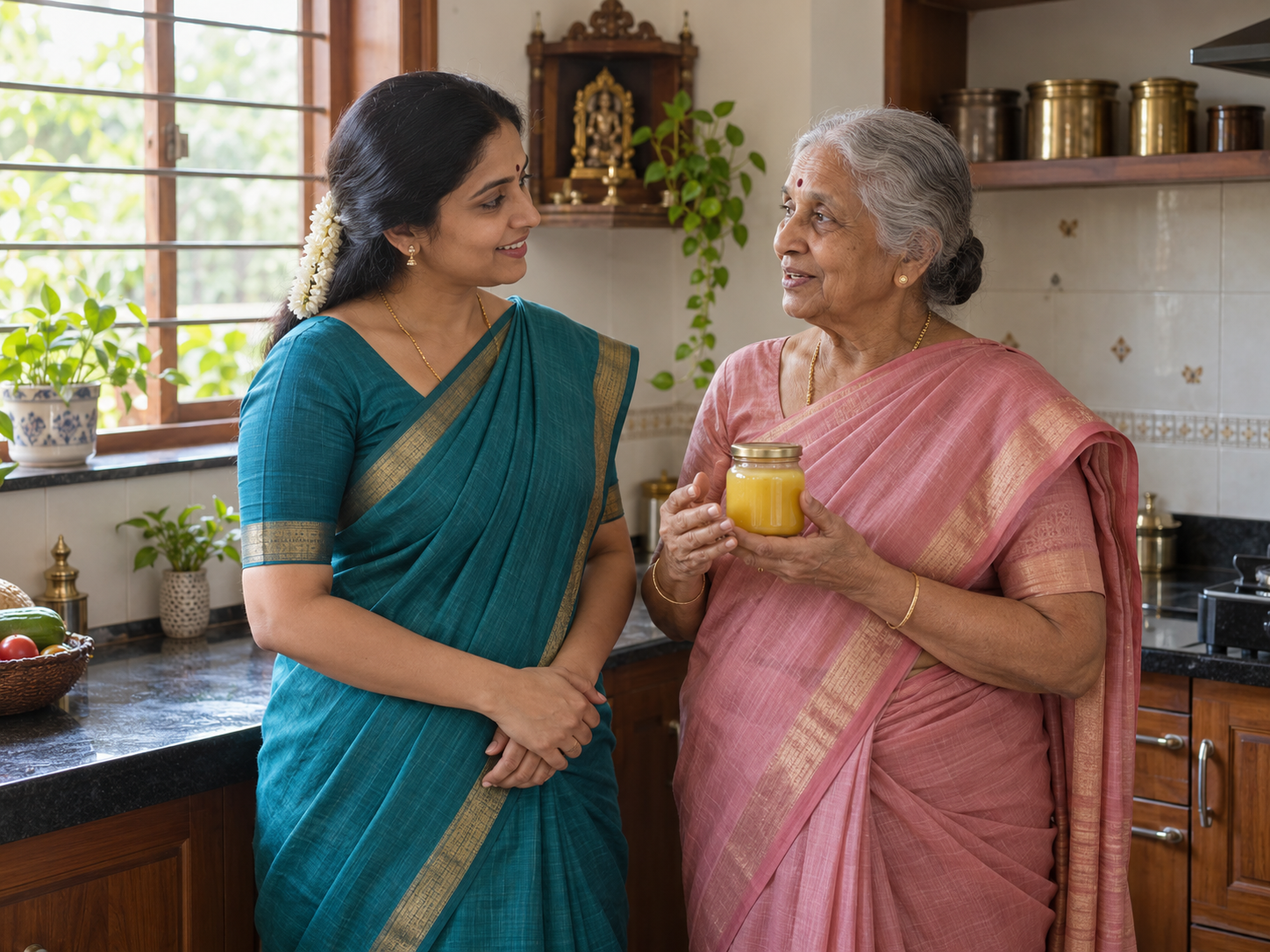
Familiarity is the sixth. A home-care ritual passed through a family can feel comfortable and personal. You can value that connection while keeping the practical limits clear. Family experience is not a reliable way to predict how another person's skin will respond.
If you choose to explore a traditional use, keep it separate from the way you handle food for the household. Avoid putting used fingers or tools back into a shared jar. Use clean utensils and do not turn the jar into a storage container for homemade mixtures. Basic handling matters even when the ingredient itself feels familiar.
A simple routine is easier to assess than several new changes at once. Notice whether your skin feels comfortable, and stop if it becomes irritated or breaks out. Ghee should not replace prescribed treatment, sunscreen or a suitable daily moisturizer. Its place, if any, is a limited personal choice within a routine that already meets your skin's needs.
A Food Tradition Kept in Perspective
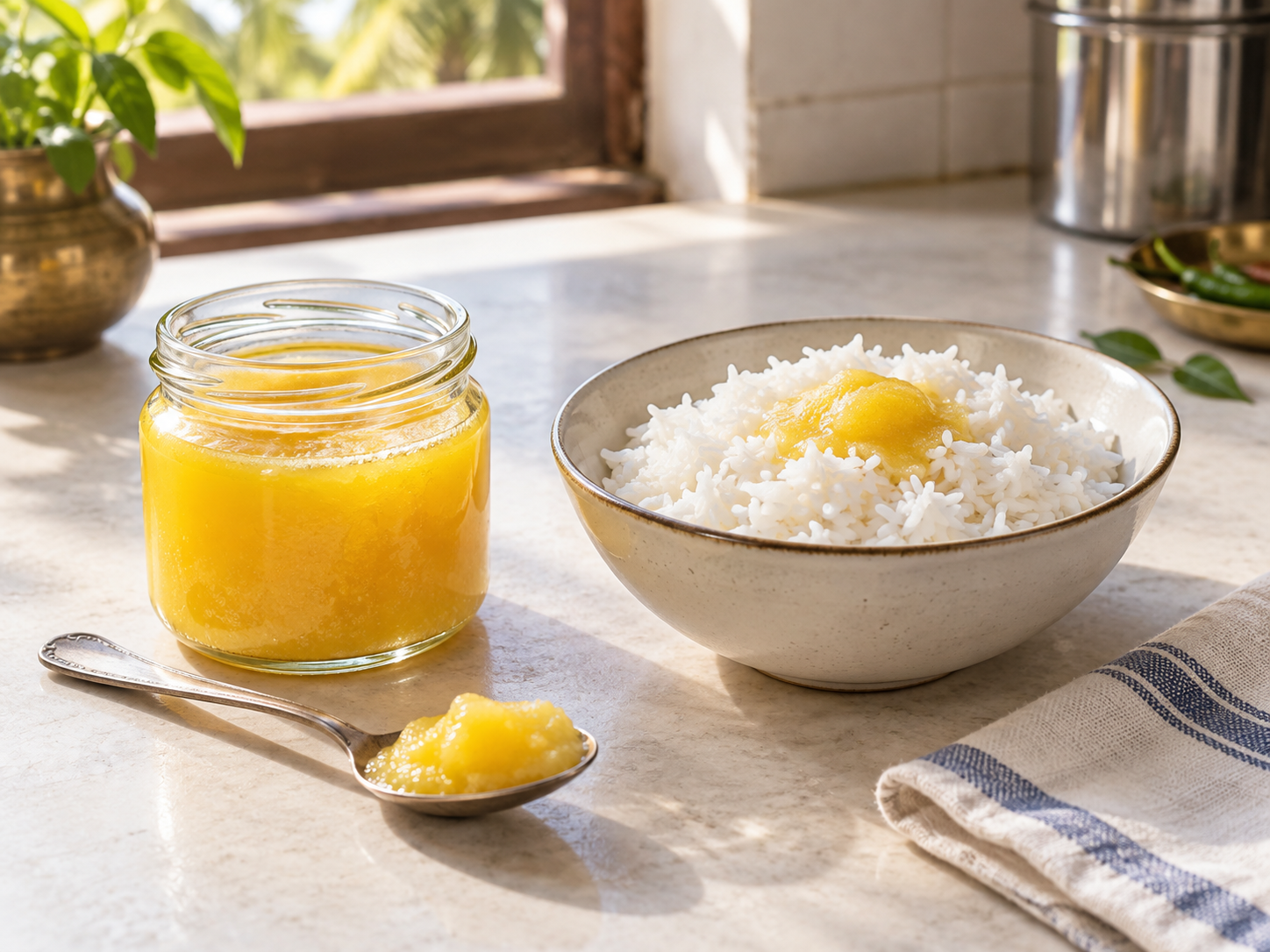
The seventh reason is that ghee already belongs to the food routine of many households. Someone interested in traditional wellness may prefer to keep enjoying it as a cooking ingredient instead of applying it to the face. That is a different choice from using food as a treatment for a skin problem.
Eating more ghee is not an established shortcut to clearer or brighter skin. Claims that it removes toxins, clears acne or guarantees a glow go beyond what should be promised here. A varied diet and appropriate skin care are broader matters than the presence of one ingredient. There is no reason to increase your intake simply because a skin-care article mentions ghee.
At Raghas Dairy, we want customers to make that distinction clearly. Enjoy a food for its role in your meals, and judge skin-care choices by suitability and evidence. If you are managing a dietary restriction or a medical concern, get individual advice. A familiar ingredient can remain part of daily life without being asked to solve every health concern.
Your Experience With Raghas A2 Desi Ghee
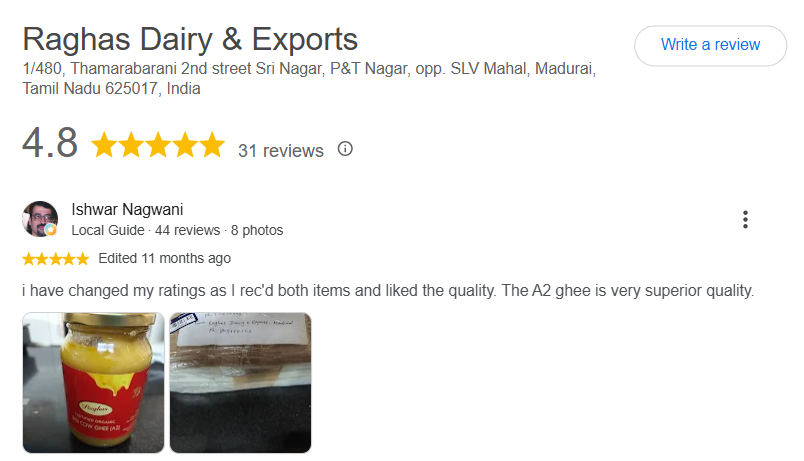
We welcome feedback about Raghas A2 Desi Ghee and how it fits into your household. Tell us about your experience with the product and the questions you would like answered. Personal feedback can help us understand our customers, but it should not be taken as proof that ghee treats a skin condition.


Frequently Asked Questions
Is A2 Ghee Proven to Work Better on Skin? The A2 label does not establish better results for skin care. It should not be treated as proof that a food-grade ghee is a superior moisturizer or skin treatment.
Can I Use Ghee on Acne-Prone Skin? Do not assume it will suit acne-prone skin or treat acne. Choose appropriate skin-care products and seek advice if you are unsure, particularly when you already have an active skin problem.
Can Ghee Replace My Moisturizer? It is not a direct substitute for a moisturizer formulated for your skin. Fragrance-free creams and ointments are established options for dry skin; persistent symptoms deserve professional advice.
Does Eating Ghee Guarantee Glowing Skin? No. Skin appearance has many influences, and adding more ghee to food does not guarantee a visible benefit. Keep dietary choices separate from treatment promises.
When Should I Stop Using It? Stop if you notice irritation, itching, redness, swelling or breakouts. Seek medical advice for a significant or persistent reaction, and avoid home experiments on broken or inflamed skin.
Conclusion
The most reasonable interest in A2 desi ghee for skin care starts with traditional use and personal preference, while keeping the evidence limits clear. Its rich texture, familiarity and simple identity explain the appeal, but they do not prove treatment benefits or make it suitable for everyone. Consider your skin type, avoid complicated mixtures and stop if irritation develops. Keep prescribed care and everyday protection in place. At Raghas Dairy, we prefer honest, practical guidance to promises of instant results. You can appreciate ghee as a familiar food without expecting it to replace a well-chosen skin-care routine.
Visit Raghas Dairy to learn more about our products and join our community of happy customers.

Member discussion