
Nutritional Comparison: A2 Butter Vs Regular Butter
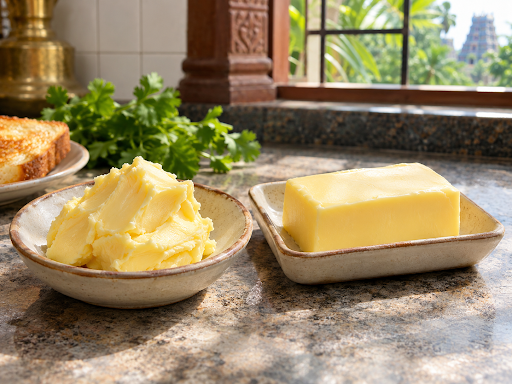
A small pat of butter can finish a warm dosa or make breakfast toast more inviting. Choosing the pack takes a little more thought, especially when A2 butter sits beside regular butter and both promise quality. What actually changes nutritionally? The useful comparison starts with equal portions and the details on the label. Milk source matters to the product's identity, while fat content, salt and preparation help explain what you will eat. Comparing those details makes everyday shopping simpler.
Understand What the A2 Label Tells You
A2 butter identifies the milk used to make it. Raghas describes its butter as made from A2 desi cow milk. That description tells you about its source, but it does not establish a lower calorie count or a higher vitamin content than every regular butter on the shelf.
Butter making concentrates milk fat through churning. The fat gathers into a solid mass while buttermilk separates, which explains why butter's nutritional profile differs so much from milk. Comparing the two butter packs therefore calls for the finished product's nutrition information, not assumptions carried over from the milk.
Regular butter also covers several different products. Sweet cream, cultured, salted and reduced-fat versions can all appear in the same shop. Choose the type you actually use before deciding which A2 product makes a fair comparison.
Compare Fat and Calories at the Same Serving Size
Full-fat butter is mostly milk fat. General nutrition information places commercial butter at roughly 80 to 82 percent fat. Raghas's published butter figures list 81 grams of fat and 717 calories per 100 grams. Those manufacturer figures sit within that familiar full-fat range; they do not show an automatic calorie advantage for A2 butter.
For a smaller comparison, 10 grams works out to about 72 calories and 8.1 grams of fat using those published figures. This is a calculation for reading labels, not a suggested daily serving. Use the same weight for the regular butter you compare, and check its saturated fat as well as total fat.
A light-butter entry will give a different answer. One nutrition database entry lists 70 calories for a 14-gram tablespoon, but explicitly identifies the food as light, unsalted stick butter. Using that entry as ordinary full-fat butter would make the comparison misleading.
Keep Vitamin Claims Separate From Milk Labels
Butter can contribute fat-soluble vitamins, including vitamin A. The amount in the portion you eat matters more than a broad claim on the front of a pack. A nutrient value for 100 grams can look impressive while representing much more butter than you would spread at breakfast.
Cow feed is another factor in discussions about butter composition. Grass-fed and grain-fed comparisons concern the animals' diets, whereas an A2 description concerns the milk source. Those terms do not measure the same thing, so evidence about one should not become a promise about the other.
The available nutrition information does not provide a matched laboratory comparison of these A2 and regular butters. Without that, it cannot establish that A2 butter always supplies more vitamins or better nutrition. Look for product-specific amounts and keep any claimed advantage proportional to the evidence.
Check Salt, Ingredients and Cultured Flavour
Salted versus unsalted can be a more useful everyday distinction than the A2 label alone. Unsalted butter gives you more control over the salt you add to a dish. If you buy salted butter, read the sodium figure and compare it with the same serving size on the other pack.
Check the ingredients too. Plain butter commonly lists cream, or cream and salt. A short list makes it easier to understand what you are buying, although simplicity by itself does not establish that one product has a superior nutritional profile.
Culturing changes flavour and can give butter a gentle tang. Sweet cream butter offers a different taste. You might prefer one on toast and another in baking, but richer flavour is not evidence of extra nutrients. Treat taste, salt content and nutrition as separate parts of the decision.
Choose Butter Around the Food You Actually Cook
Think about where butter appears in your kitchen. Is it a finishing touch on breakfast, an ingredient in baking or something you add while cooking? That answer gives the comparison a purpose. For baking, check the recipe's salted or unsalted requirement before choosing a pack; for spreading, flavour and texture may guide your preference.
Portion size deserves the same attention whichever butter you choose. A modest pat and a generous scoop are different amounts even when they come from the same pack. Comparing equal weights helps you see the product differences without letting an uneven serving distort the result.
You can choose A2 butter for its stated milk source or cultured character without expecting it to be a low-fat food. Keep the pack's ingredient and nutrition information alongside those preferences. A butter you enjoy, understand and use thoughtfully is easier to fit into ordinary meals than one chosen for an unsupported health promise.
Bring Raghas Organic Butter to Your Kitchen
We make our Raghas Organic Butter from A2 desi cow milk, with culturing and churning that develop its creamy texture and gentle flavour. Our butter suits spreading, cooking and baking, so you can choose how it fits your own kitchen. Check the current pack for ingredients and nutrition information, keep it refrigerated, and use a clean knife each time you serve it.
Frequently Asked Questions
Does A2 Butter Automatically Have Fewer Calories?
No. An A2 milk-source description does not establish a lower calorie count. Compare the calorie figures for equal weights of the two finished products, making sure both are full-fat butter if that is what you intend to buy.
Can I Compare Light Butter With Regular Butter?
You can compare them as different product types, but label them clearly. Light butter should not stand in for ordinary full-fat butter when you are trying to isolate differences associated with an A2 label.
Does Cultured Butter Have More Nutrients?
Culturing helps develop flavour. It does not, on its own, prove that a butter contains more vitamins or offers better nutrition. Product-specific nutrition information is needed for that comparison.
What Should I Check First on the Pack?
Start with the product type and serving weight, then compare total fat, saturated fat and sodium. Read the ingredients and consider whether you want salted or unsalted butter for the food you plan to make.
Final Takeaway
A fair comparison of A2 butter and regular butter begins with two comparable products and the same serving weight. Check calories and fat, then look at salt, ingredients and the flavour you prefer. The A2 description helps identify the milk source, but it does not replace the finished product's nutrition information. You can enjoy cultured butter for its taste without attaching a health claim to every spoonful. For your next purchase, choose the butter that suits your cooking and read its current label carefully. That gives you a clearer basis for everyday meals than assuming one category must always be nutritionally superior.
Visit Raghas Dairy to learn more about our products and join our community of happy customers.




Member discussion