
The Ultimate Guide for Assembling Your Modeling Portfolio

A standout modeling portfolio is what gets you taken seriously in a competitive industry. It shows your strengths and your personal brand, and that is what brings agents and clients to you. Start by identifying your niche, then focus on high-quality, versatile images that cover your emotional range. The layout should be clean and engaging. After that, keep the portfolio current by following industry trends and meeting people. Here is how each stage works.
Understanding the Significance of a Modeling Portfolio

A portfolio is how you get through the door. It presents your strengths and your personal brand, and a well-crafted one is what attracts agents and clients, which makes it central to your career.
Update it regularly so it reflects your growth and where you have got to in your modeling career.
Professional presentation matters in both print and digital formats. A clean layout and high-quality images are what let your best work register.
Identifying Your Unique Modeling Niche

Start with an honest self-assessment. Consider your physical features, meaning height, body type, and facial characteristics, and how they match different kinds of modeling.
Market research comes next. Look into the various categories and ask industry professionals for feedback. Testing different styles through photoshoots will show you which ones present your attributes best.
Versatility matters in a portfolio, but your strongest niche is what attracts clients, so give it the emphasis. Once you have defined your focus, whether that is fashion, commercial, or another specialty, you can tailor the portfolio around that expertise and separate yourself in a competitive industry.
Key Components of a Successful Portfolio

A successful portfolio needs a few specific things.
Start with a collection of high-quality photographs that cover your versatility and style. That means a professional headshot plus full-body shots in fitted clothing so your proportions read accurately.
Aim for 8 to 12 images across your emotional range and different looks. Include lifestyle and commercial shots to demonstrate adaptability.
A one-page resume with your measurements and experience gives a viewer the context they need. Every image must be crisp and clear, and properly labeled so it is easy to identify.
Designing Your Portfolio for Maximum Impact
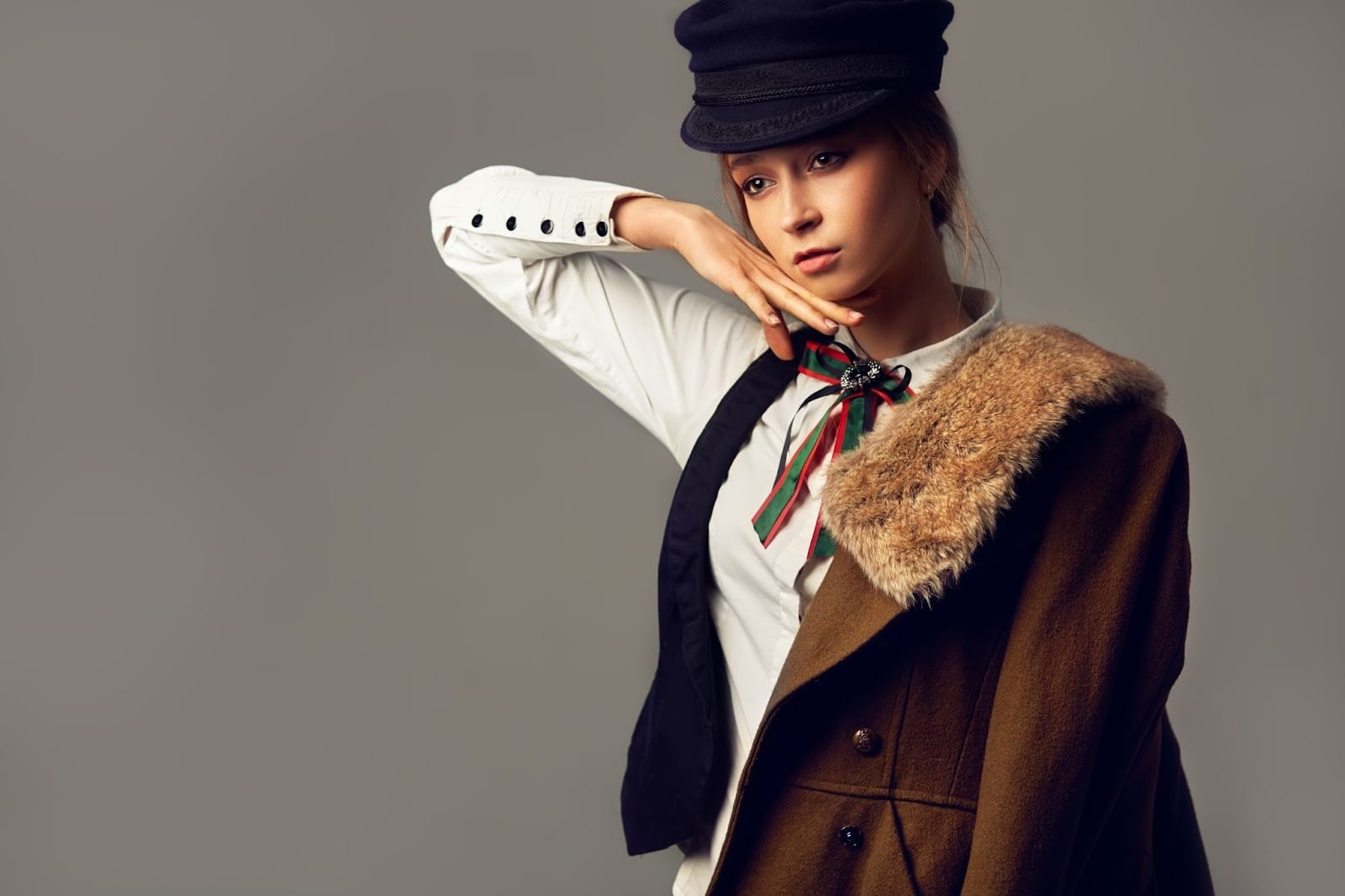
Designing for impact means quality over quantity. Aim for 10 to 20 high-quality images that cover your versatility while holding together as one cohesive presentation.
Open with striking beauty shots that bring out your features, then move to full-body images showing your physique and posture. Keep the layout clean and uncluttered so the photos stay the main focus.
Include an engaging About section that tells your story and your vision, along with a contact section so inquiries are easy. Social media links make you more visible and give potential clients another way to reach you.
Strategies for Maintaining Relevance and Engagement

A well-designed portfolio still needs maintaining, because the industry keeps moving.
Update regularly and replace outdated images with fresh work that reflects your growth. Follow industry trends too, and adjust the portfolio to match what clients are currently asking for.
Networking matters here. Engage with industry professionals and turn up to events, because that is how your visibility grows. Use social media deliberately to present your latest projects and stay in contact with your audience.
Different media formats add something as well. Video, in particular, makes a portfolio more dynamic than stills alone.
What Our Clients Say
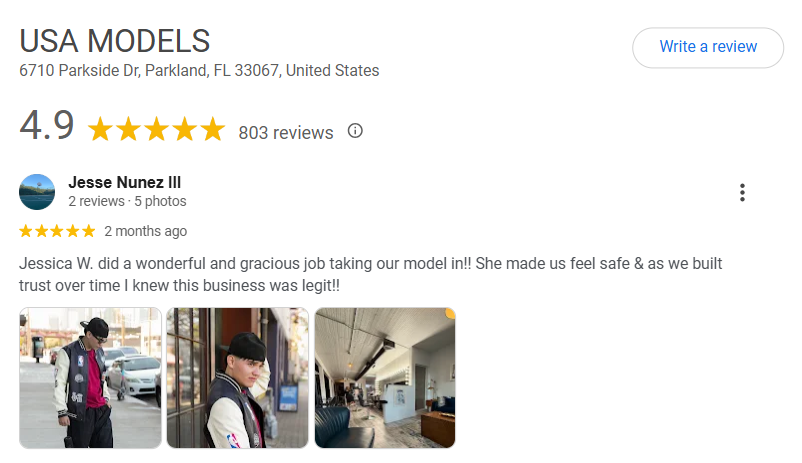
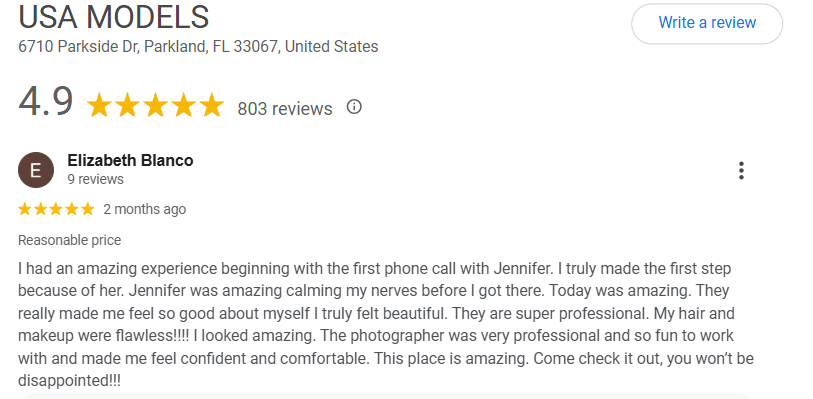
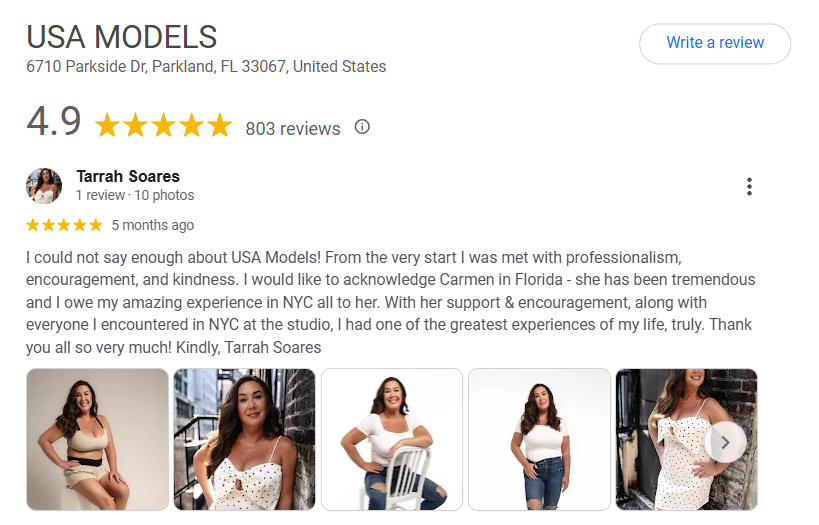
At USA Models Photography, we value our clients' feedback, and their reviews describe the experience we provide. Below you will find a collection of screenshots of feedback from various platforms like Google My Business. They cover the quality of our work and how satisfied clients were with it. If you are looking to start your modeling portfolio, see how we can help by visiting USA Models Photography.
Frequently Asked Questions
How Do I Choose the Right Photographer for My Portfolio? Prioritize experience, review their previous work, discuss your vision, and make sure you feel comfortable with them. A strong working connection shows up directly in the results.
What Are the Costs Associated With Creating a Modeling Portfolio? Expect expenses for professional photography, editing, prints, and website hosting. Budgeting carefully lets you present yourself properly without overspending.
How Often Should I Update My Modeling Portfolio? Regularly, ideally every few months. That keeps the work fresh, shows your growth, and keeps you reflecting current trends in a competitive industry.
Can I Include Personal Projects in My Portfolio? Yes. They show your creativity and your own style, which helps you stand out. Just make sure they fit your overall brand and your modeling niche.
How Do I Handle Negative Feedback About My Portfolio? Treat it as information rather than a verdict. Analyze the critiques, refine the work, and use what you learn to improve the overall presentation.
Conclusion
A standout modeling portfolio is what presents your strengths and gets the attention of agents and clients. Identify your niche, include the components that matter, and design for impact, and you end up with a portfolio that represents you accurately. Keep it fresh and engaging so it stays relevant as the industry changes. With some dedication and creativity, the portfolio does the work of introducing you.
Note: We enjoy sharing creative inspiration, photography tips, and industry insights to help you capture life's best moments. The services, styles, and equipment mentioned in our articles are for informational purposes only and may not reflect our current offerings. For the latest on our photography services and portfolio, visit USA Models.





Member discussion