
How to improve your portfolio with proven strategies and tips

Improving a modeling portfolio comes down to a handful of things. Identify your style and niche so you stand out. Curate your best work and collaborate with experienced photographers. Use online platforms to get seen. Update regularly so the portfolio stays current. Do those and you attract the right clients.
Understanding the importance of a strong portfolio

For any model working in a competitive industry, the portfolio is the ticket. It's what puts your strengths and personal brand in front of agents and clients.
Your images need to match market demands and client expectations, so consult with agents to work out what's missing.
Quality beats quantity. Aim for 6 to 20 quality photos that show what you can do as a model.
Include a variety of facial expressions and poses, since that demonstrates versatility and appeals to a wider set of clients. Keep the portfolio updated and it reflects how you've grown while staying relevant in a field that keeps changing.
Identifying your unique style and niche

Working out your style and niche is what separates you from everyone else applying.
Start with an honest self-assessment of your physical features, height and body type included, to see where you naturally excel. Market research matters too. Look at the different modeling categories that suit your attributes and get feedback from people in the industry.
Testing various styles across different photoshoots is how you find what fits your identity. Narrowing down to your niche improves the portfolio and attracts clients who appreciate what you specifically bring, which is a solid start to a modeling career.
Curating high-quality content for your portfolio

Curation means selecting the work that best represents your brand.
Include a range of professional photos and videos that show your versatility, headshots and dynamic lifestyle shots among them. Working with experienced photographers is how you capture the looks you're after.
An engaging "About Me" section helps too. It conveys your personality and experience and gives clients something to connect with.
Leveraging online platforms for greater visibility

A mobile-responsive portfolio website puts your best work in front of people and makes it easy to reach.
Keep the layout clean so the photos stay the focal point. Linking the portfolio to your social media profiles boosts visibility and strengthens your personal brand.
Optimize your content for search engines to attract agencies and clients. Engaging with industry professionals online helps you network and stay relevant.
Regular updates and adapting to trends keep the portfolio fresh and appealing, which improves your chances of getting noticed and hired.
Regularly updating and maintaining your portfolio

Creating a good modeling portfolio is the easy part. Maintaining and updating it matters just as much.
Treat the portfolio as a living document that evolves alongside your career. Renewing your images regularly means it reflects your current look and what you can do now.
Aim for a concise selection of 6 to 20 quality photos that show your versatility and range of expressions.
Consult with agents to identify the gaps and understand what local clients want. Remove outdated images, add new content, and the portfolio stays relevant.
Make sure it consistently matches market demands and shows how you've grown as a model.
Client feedback and experiences
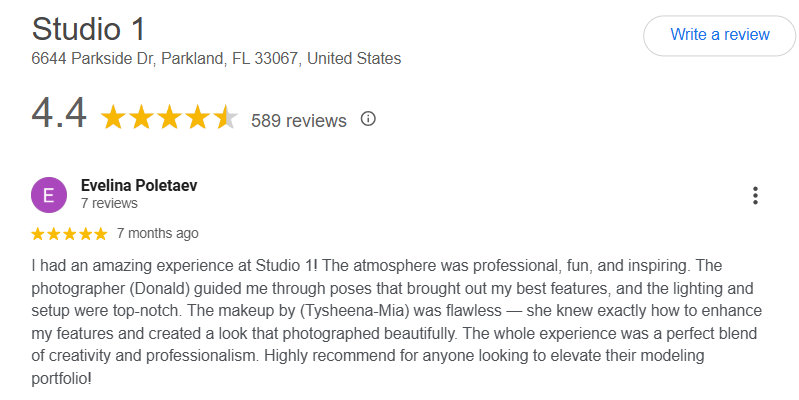
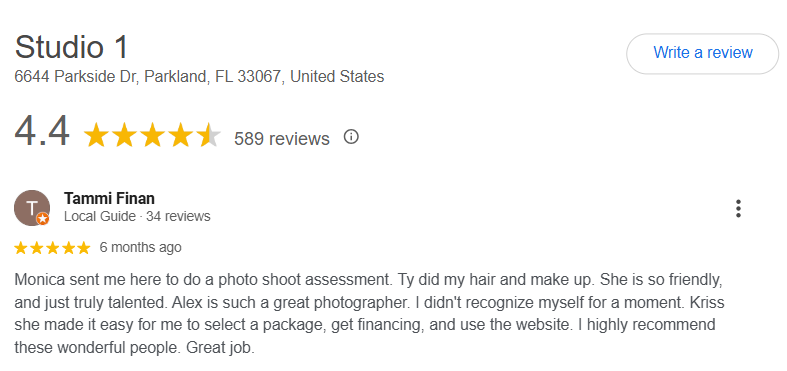
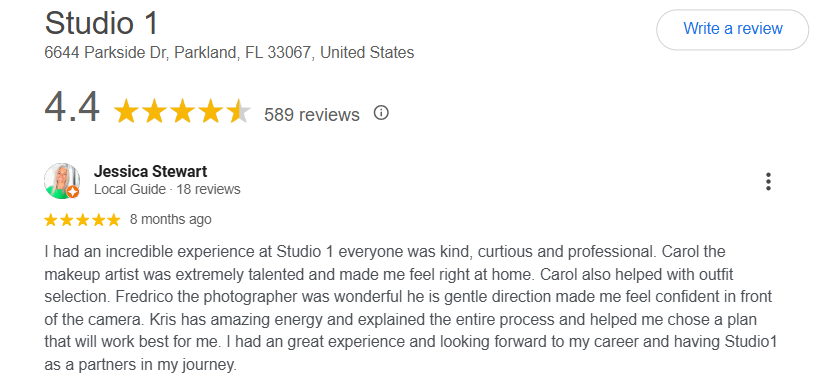
At Studio1 Photography, we value the feedback we get from our clients. Below you'll find screenshots of reviews from various platforms, including Google My Business. Many clients share their thoughts on how our guidance helped them improve their portfolios. Those words keep us working to provide a friendly and supportive space for aspiring models. For more information about our services, visit Studio1 Photography.
Frequently asked questions
How often should I update my portfolio? Every few months, or after any significant project. That keeps the work fresh, shows your growth, and means you're presenting your best self to potential clients.
What should I include in my portfolio's About Me section? Your background, your modeling experience, and your strengths. Share your passion for modeling and what sets you apart from others in the industry.
How can I handle negative feedback on my portfolio? Treat it as constructive. Analyze the critiques, identify what to improve, and remember that growth comes from taking on the challenge and refining the work.
Should I include personal projects in my portfolio? Yes. They show your creativity and passion and give clients insight into your skills. They also help you stand out and demonstrate versatility.
How do I choose the right photographer for my portfolio? Look for someone whose style resonates with your vision. Review their past work, discuss your ideas, and make sure they understand your modeling goals.
Conclusion
Improving your modeling portfolio is what sets you apart in a competitive industry. Understand why it matters, identify your style, curate quality content, and use online platforms, and you end up with a strong representation of your brand. Update it regularly to keep it fresh and relevant. That collection of images becomes a narrative that resonates with agents and clients.
Visit Studio 1 Photography for more information.
Note: We enjoy sharing creative inspiration, photography tips, and industry insights to help you capture life's best moments. The services, styles, and equipment mentioned in our articles are for informational purposes only and may not reflect our current offerings. For the latest on our photography services and portfolio, visit Studio-1.us.





Member discussion